

February 01, 2026
written by Shanida Carter
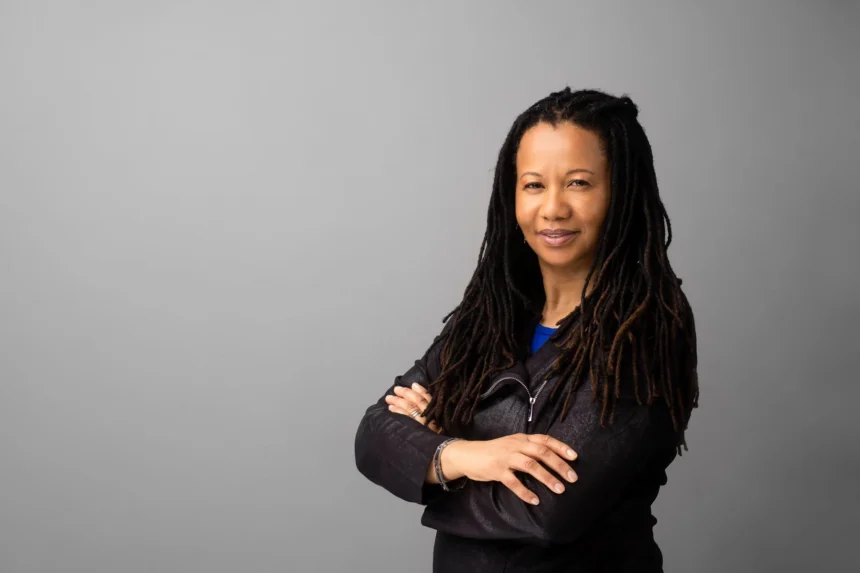
Black History Month isn’t confined to February for Dr. Charmaine Nelson. It is a year round mission. But this February is particularly busy for the first generation Jamaican Canadian scholar, who is releasing a groundbreaking children’s book and hosting the first art exhibition through her research institute—both rooted in a subject few people are aware of: slavery in Canada.
“Canadian institutions have invested a lot of energy, effort and capital in erasing Canada’s colonial past,” Nelson said.
“What needs to be understood is that when you erase 200 years of slavery in Canada, you also erase the fact that Black people have been in the nation since the 1600s.”
Breaking the Silence
Nelson is a provost professor of art history at the University of Massachusetts Amherst and the founding director of the Slavery North initiative. Launched in 2022, Slavery North is an academic and cultural hub working to transform public understanding of the neglected histories of trans-Atlantic slavery in Canada and the northern United States.
This month, Slavery North is hosting its first art exhibition, featuring Kenneth Scott’s collection of mid-20th-century Black New Brunswick photography
Nelson is also releasing her first children’s book, Joe the Pressman: The Incredible True Story of an Enslaved African Boy Who Became a Heroic Freedom Fighter. The book tells the story of an African boy who was stolen into slavery and trafficked through the Caribbean, Philadelphia and eventually Quebec City. Joe was forced to work for the founders of the Quebec Gazette because of his intelligence and skill. He made five attempts at freedom but died enslaved.
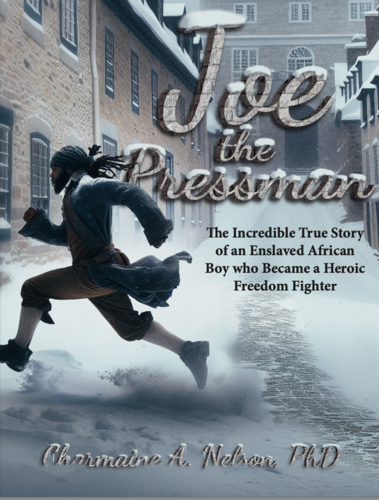
“Joe the Pressman” is the first English-language children’s book to explore Canada’s 200-year history of slavery.
“One day I just sat down to write, and the children’s book just flowed out of me,” Nelson said.
“It’s interesting that it came out as a rhyming poem, a genre I had never written before. Although there are many children’s books about the Underground Railroad that position Canada as a haven to which enslaved African Americans fled, there were only two other books—both in French—that addressed slavery in Canada.”
[Additional Read: Inside the Legacy of Desha Rambhajan-Malli: Trinidad’s Most Beloved News Anchor]
An adult nonfiction book about Joe is also underway.
Caribbean Origins Shape a Mission
Nelson’s Caribbean heritage is the foundation of a career in art history dedicated to confronting historical erasure. Her passion began at home with encouragement from her parents: Barbara Nelson, born in Ginger Hill, St. Elizabeth, Jamaica, and Maxwell Nelson, from Oracabessa, St. Mary. Nelson was born in Toronto after her parents immigrated to Canada in the late 1960s.
“The contrast between what I was learning at home and the absence of Black Canadian history in school allowed me to question the selective, celebratory history institutionalized in Canadian curricula through the narrow teaching of the Underground Railroad (1834–1865).”
“This manifested in the erasure of two centuries—from the 1600s to 1834—of trans-Atlantic slavery under British and French rule, alongside the erasure of centuries-long Black Canadian presence.”
A lifelong lover of the arts, Nelson pursued her academic path with a bachelor of fine arts and a master’s degree from Concordia University in Montreal, followed by a doctorate from the University of Manchester in the United Kingdom. She later became the first Black professor of art history at a Canadian university.
When she resigned from McGill University in Montreal after 17 years, Nelson said she was one of only 10 Black tenure or tenure-track professors among more than 1,700 faculty members. James McGill, whose £10,000 bequest founded what is now McGill University, was a West Indian slave merchant.
“The customs duties and taxes paid by men like Joshua Mauger and James McGill on ships carrying enslaved people and the products they were forced to produce in the Caribbean helped build transportation infrastructure such as docks and ports.”
“Those funds were also reinvested into enterprises like shipbuilding.”
“James McGill has been problematically lauded as a prosperous businessman and generous philanthropist, but it is fair to ask how he made his money. It was not solely from the fur trade, as McGill University long claimed. The university did not update its website to acknowledge that he was an enslaver and West Indian merchant until it was shamed into doing so during media interviews I gave in 2021, when my students and I commemorated the bicentenary of the university.”
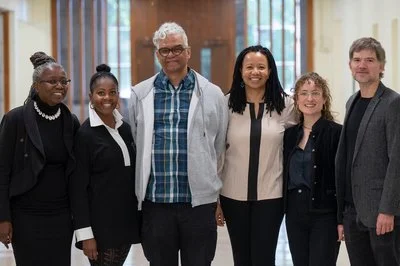
Photo courtesy of Jon Crispin
Blazing New Trails
Nelson’s commitment to education and representation also extends into media. She is the founder of Black Maple Magazine, a publication focused on Black Canadians and the wider Black diaspora.
“For far too long, the only dynamic popular culture options available to Black Canadians have been U.S.-based and African American-centric.”
“Of course we love Ebony, Essence and Jet, but they often reflect a limited African American idea of Blackness that does not include Black Caribbean identities, Afro-Latinos or continental Africans.
“As a result, popular references in music, film, television and literature have promoted a U.S.-centric Blackness that is not universal.”
Meanwhile, Slavery North is organizing its first academic conference in July. Rebellion, Resistance and Refuge: Slavery and Border-Crossing During the American Revolution marks the 250th anniversary of the Declaration of Independence and focuses on Canada-U.S. border crossings and the experiences of enslaved people during the Revolutionary War.
“Citizens who do not know their history cannot be truthful and equitable in the present,” Nelson said.
“Canadians do not know their history. Because of this, white Canadians routinely offload their homegrown racism onto the United States with claims that ‘it never happened here.’’
“But those claims are not the reality for Black Canadians across all spheres of life. An honest conversation begins with learning and acknowledging these histories so that redress, repair and reconciliation become possible.”