
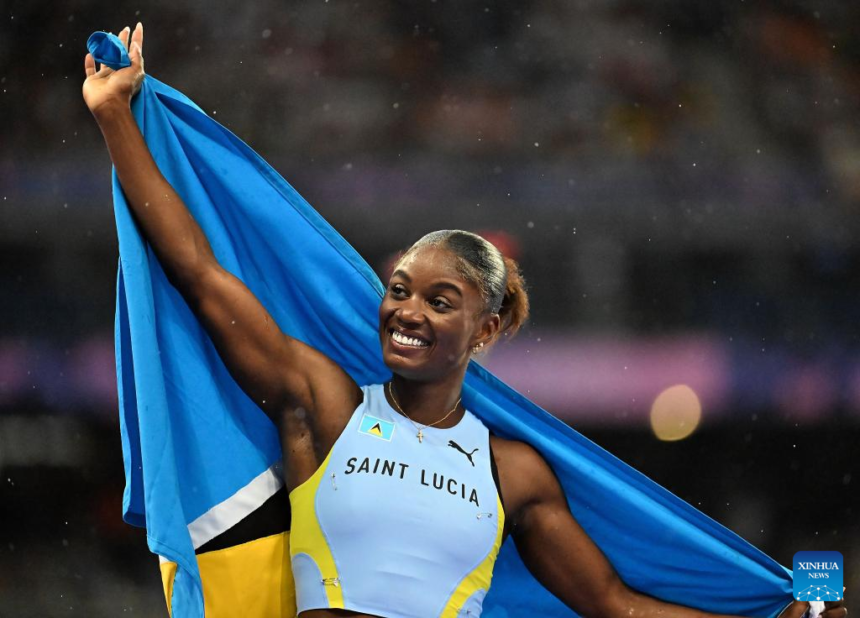
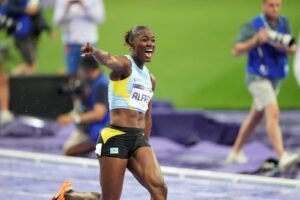
By the time Julien Alfred stepped off the track, history had already happened. Saint Lucia had its first Olympic medalist. Alfred did not immediately understand the magnitude of the moment. It came later, away from cameras, away from noise, inside the quiet of a stadium tunnel.
“I didn’t realize, not until I got back into the tunnel that I just created history and achieved my dreams.”
The full weight of it came weeks later, when she returned home. Residents lined the roads across multiple districts. Cars slowed. People waved flags. Children climbed fences. Some cried. Many shouted her name.
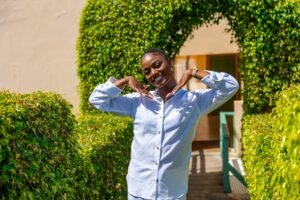
“I didn’t realize how much it meant to my country until I went back to St. Lucia and realized how everybody felt proud,” she said.
Alfred’s medal altered more than record books. It changed what feels possible on an island of fewer than 200,000 people that has rarely been associated with Olympic hardware.
View this post on Instagram
For Alfred, sport was never just recreation. It was structured. It was an escape. It was a strategy.
“In the Caribbean, education is such a big thing — our parents believe that we must ‘stay in your books,’” Alfred said. “Sport represents balance. But it also represented a ticket to get out.”
She trained daily with a clear purpose: to build a life beyond poverty, beyond limited opportunity, beyond the borders of Saint Lucia. That clarity developed early. So did doubt.
[Additional Read: Inside the Legacy of Desha Rambhajan-Malli: Trinidad’s Most Beloved News Anchor]
Competing against athletes from powerhouse nations often made Alfred feel small — not in ability, but in perceived value.
“Being from a tiny island like St. Lucia … feeling small or inferior to other countries came with its own challenges,” she said. “Even when you look at the market, people may not see marketability because of where I’m from.”
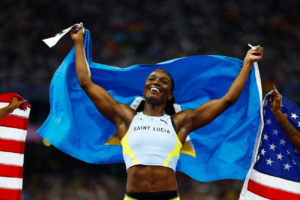
Her Olympic medal disrupts that assumption. It forces recognition. It demands space. Alfred, now in her mid-20s, understands that she carries more than personal ambition into competition. She carries national expectations. She also understands that pressure must be managed carefully.
“I’m realizing that I’m doing it for myself first,” she said. “When I’m in a particularly difficult practice, I’m doing it by myself. Nobody’s coming to save me.”
That mindset, she said, builds strength. It also shapes her sense of responsibility to young girls watching her.
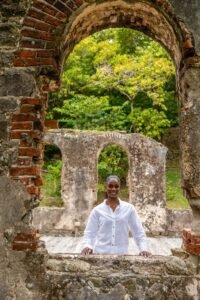
Alfred speaks directly about body image and representation, particularly for girls whose physiques do not align with narrow beauty standards.
“When young girls can look at their TV and see themselves represented in somebody like myself or a different body type similar to theirs, it allows them to own who they are,” she said.
Her message to young Caribbean girls is simple and consistent
“Take up space,” Alfred said. “Own who you are.”
Faith and family anchor her through rising visibility.
“I stay grounded by my fear of God,” she said. “The same way you get it, it can be taken away.”
She does not describe herself as finished.
She is exploring interests outside of track, including beauty and fashion. She is building a foundation focused on giving back. She is still learning who she is beyond race results.
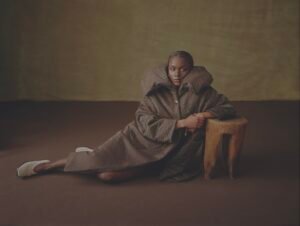
When asked about legacy, Alfred does not reference medals.
Her achievement now lives larger than a single Olympic cycle.
For Saint Lucia, it is a first.
For the Caribbean, it is affirmation.
For women watching from places rarely centered in global sport, it is permission.