

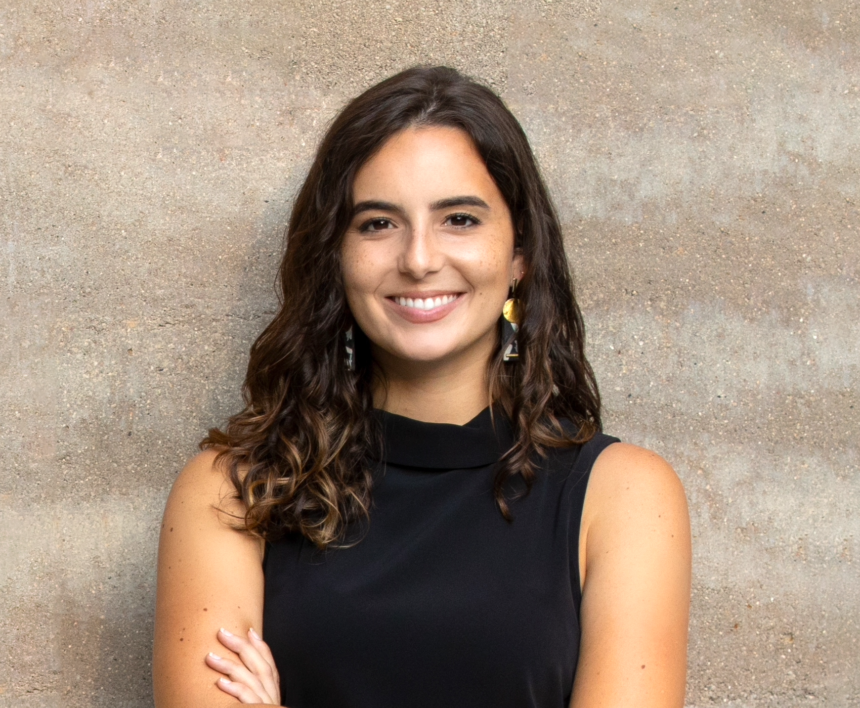
Nicole González has worked on a rover bound for Mars. She is now focused on keeping refrigerators running in Puerto Rico. The co-founder and chief technology officer of Raya Power says the gap is not the technology but who gets to use it.
González grew up between two worlds: the more stable infrastructure of the DC area and long yearly stays with family in Puerto Rico, where outages every other day were normal. She studied electrical engineering at Princeton University and began her career at NASA’s Jet Propulsion Laboratory, where she worked on Mars rover electronics and tested the motor control system for what became the Perseverance rover.
Then Hurricane Maria hit. She lost contact with her family for two weeks. She helped with supply drives and with groups of engineers building technology for recovery. One question kept growing: How could she work on a rover meant to run on Mars for 20 years when the lights could not stay on at home?
She earned a master’s degree in product design for social impact at Stanford. There she took Design for Extreme Affordability, later helped teach it, and worked with a solar home system manufacturer on small DC systems for off-grid homes in East Africa. At a friend’s wedding in Mexico, she was introduced to Meghan Wood. After a two- to three-hour conversation about solar as a democratizing technology, the two eventually began building Raya together.
[Additional Read: 30 Caribbean Latina-Founded Brands to Shop This Holiday Season]
González says solar and batteries are mature and cheaper than ever. Rooftop solar, however, requires owning a home, a roof that can hold panels, permits and $25,000 or more up front. That leaves out renters, families in older homes and people looking for an affordable entry-point.
Hurricane Maria knocked down about 80% of the island’s transmission and distribution lines, González says. Outages remain routine, and families pay among the highest residential rates in the U.S. She notes that more of Puerto Rico’s electricity now comes from rooftop solar, yet the 80% or more of households that need it most cannot get a solar and storage system.
Raya’s system sets up in a few hours. It needs no rooftop install, no electrician and no interconnection approvals because it powers critical appliances directly rather than pushing power to the grid. A few key features:
-
In sunlight, it runs appliances such as a refrigerator and air conditioner and charges the battery.
-
At night, it runs on stored energy.
-
On cloudy days, it can draw on grid power.
-
When the grid goes down, it switches to off-grid mode automatically.
-
It is modular, so customers can start small, expand and take it with them when they move.
Families with pilot units say they no longer worry about losing $1,000 of food for a family of five during an outage. During the last outage, some offered to charge neighbors’ phones on their Raya system.
Hardware is hard, González says.
She and Wood installed the first pilot systems themselves. She recalls standing on a shipping container in the San Juan sun, expecting a two- to three-hour prototype install. Five hours in, they were nowhere near done. The team scrapped that design and went through eight or nine major iterations to reach the current system.
The product must also withstand humidity, salt, extreme heat and cold, and storms. It also has to look like something people want in their homes, not an emergency box. Another challenge is convincing investors, since the communities Raya serves often do not look like the people writing the checks.
González defines meaningful innovation as giving people agency. She points to resourcefulness after Maria: her grandmother charged a phone from a car battery, and people rigged grocery carts to zip lines to move food and medical supplies between mountaintops. At NASA, she says, designing for a spacecraft that cannot get a technician forces redundancy, simplicity and elegance, and she brings that mindset to Raya.
View this post on Instagram
Raya builds with communities through codesign, local partners and local jobs such as technicians, engineers and salespeople. Pilot customers, she says, are the most important reviewers. The team would rather scrap a design than install something that is not right.
As a woman in hardware, González describes small barriers, like wearing branded overalls from the men’s section for early installs, and quieter ones, like often being the only woman and only Latina in the room. One of the hardest, she says, was inside her: leaving a traditional role to take a risk. She says being a mom has made her a better founder and a more human leader.
González says attention to Puerto Rico comes in waves. She describes the blackouts as the result of decades of disinvestment and political and financial gridlock. Her asks:
-
Everyone: Keep paying attention between storms, listen to people on the islands and invest in local problem solvers.
-
Diaspora: Bring skills home, because there is plenty of work to return to.
-
Investors: Back founders from the communities they serve, visit those communities and be patient with hardware.
-
Employers: Create technical jobs where people live and train women for roles historically closed to them.
-
Schools: Show young women they need not choose between identity and a technical career.
-
Policymakers: Create streamlined, safe pathways for new solutions to reach the market.
Her path from Princeton to NASA to Stanford, she says, brought her closer to home each time. For González, success is a blackout that is only an inconvenience, not a crisis, in Puerto Rico, California or anywhere the grid cannot keep up.
To learn more about Raya Power visit their website here.