
On July 14, 2026, Caribbean Collective Magazine sat down with Beverley Da Costa, a first-generation Jamaican American whose journey from a small Pennsylvania town to Carnegie Mellon University is quietly redefining what Caribbean excellence looks like in STEM.
- A Creative Mind Finds Its Medium
- It gave me something to hyperfocus on, a place where I could be bold, try new things, and watch them fail or work beautifully, she said.
- [ Additional Read: Caribbean Girl Magic: Inside Dalise Lockhart’s Journey of Faith, Flight and Caribbean Excellence ]
- Becoming in the In-Between
- These experiences gave me safety, she said. Safety to express myself, to question things, to have hard conversations.
- Building Without a Blueprint
- That process taught me how I handle ambiguity and what I actually value when I have to build a path instead of following one, she said.
- We may be a minority in this field, but our outlook is unique and powerful, she said. We have the ability to shape STEM in ways that haven’t been imagined yet.
- Confronting Self-Doubt
- At one point, my own mind became my biggest competitor, Da Costa said.
- I realized I had nothing left to lose by letting go of that doubt, she said.
- Heritage as Foundation
- There are parts of my family history I cannot trace, she said. That absence is real.
- I may not know my ancestors by name, but I carry them with me in how I live and what I build, she said.
- Defining Success on Her Own Terms
- I didn’t want to do what felt safe, she said.
- Advice for the Next Generation
- You don’t have to have everything figured out. Self-doubt is part of the journey, not a sign that something is wrong, she said.
- Your mind can either lead you toward everything you want or hold you back from it, she said. The difference is what you choose to feed it.
- Reimagining Technology Through Humanity
- We rely heavily on cognition, but we underuse our senses, she said. There is so much potential there.
- Caribbean Girl Magic, Redefined
- You are never as alone as you feel, she said. You carry your ancestors with you. Every day is a chance to learn more about yourself and move closer to your purpose.
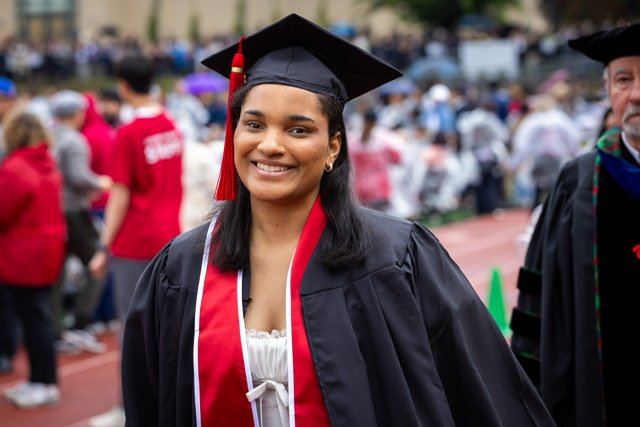
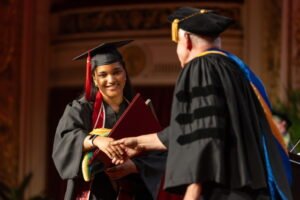
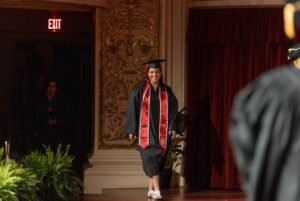
Da Costa is not only a robotics graduate. She is the inaugural graduate of Carnegie Mellon’s Bachelor of Science in robotics program, a distinction that places her at the intersection of innovation and history. But beyond the milestone, her story is one of curiosity, cultural grounding and the courage to build where no roadmap exists.
A Creative Mind Finds Its Medium
“I’ve always loved to create,” Da Costa said, tracing her path back to a middle school engineering class where she first encountered robotics. What began as curiosity quickly became focus. Programs like Girls Who Code, and later her time at Blair Academy, gave her access to tools, mentorship and space to experiment.
In the robotics lab, she found something deeper than academic interest. She found freedom.
It gave me something to hyperfocus on, a place where I could be bold, try new things, and watch them fail or work beautifully, she said.
That willingness to embrace both failure and possibility would later define her approach to one of the most rigorous and evolving fields in technology.
[ Additional Read: Caribbean Girl Magic: Inside Dalise Lockhart’s Journey of Faith, Flight and Caribbean Excellence ]
Becoming in the In-Between
Growing up Jamaican in a predominantly non-Caribbean environment, Da Costa did not initially have the language to fully articulate her identity. That clarity began to take shape during her high school years, not just through academics but through the people who created space for her to explore who she was.
Teachers became anchors: a robotics instructor who challenged her, an advisor who offered emotional grounding, a photography mentor who introduced her to storytelling through a lens. A trip to Cuba expanded her understanding of shared Caribbean and Latin American histories.
These experiences gave me safety, she said. Safety to express myself, to question things, to have hard conversations.
That sense of safety allowed her identity, values and voice to emerge with intention.
Building Without a Blueprint
At Carnegie Mellon, Da Costa stepped into uncharted territory. As part of a brand new robotics program, there were no upperclassmen to guide her and no established path to follow.
Instead, she had to define success for herself.
That process taught me how I handle ambiguity and what I actually value when I have to build a path instead of following one, she said.
Her presence in the program was not passive. She was actively shaping what the degree could become while learning from an institution deeply embedded in the origins of robotics itself.
For Da Costa, robotics is more than technical skill. It is a creative and evolving frontier, one where her perspective as a Caribbean woman matters.
We may be a minority in this field, but our outlook is unique and powerful, she said. We have the ability to shape STEM in ways that haven’t been imagined yet.
Confronting Self-Doubt
Behind the achievement is a reality many high-performing women understand but rarely articulate: imposter syndrome.
At one point, my own mind became my biggest competitor, Da Costa said.
Navigating a top-tier academic environment while carrying internal and external doubt forced her to confront how she saw herself versus how others perceived her. The turning point came when she chose to trust the voices of those who genuinely knew her over the noise that suggested she did not belong.
I realized I had nothing left to lose by letting go of that doubt, she said.
Mental health became a priority, not an afterthought. She learned to track it, care for it and lean on the community.
Heritage as Foundation
Da Costa’s Jamaican heritage is not a backdrop. It is central to how she moves through the world.
Watching her parents build a life from limited resources instilled resilience and resourcefulness. At the same time, she carries an awareness of generational gaps caused by colonial history and displacement.
There are parts of my family history I cannot trace, she said. That absence is real.
Yet she reframes that absence through imagination, cultural memory and the philosophy of Sankofa, looking back to move forward.
I may not know my ancestors by name, but I carry them with me in how I live and what I build, she said.
Defining Success on Her Own Terms
While becoming the first graduate of her program is historic, Da Costa speaks most passionately about her capstone project: a human-robot collaboration system built from a mix of inherited parts, adapted research and original work.
I didn’t want to do what felt safe, she said.
Choosing experimentation over certainty, she and her team created something unconventional and deeply meaningful. For her, the accomplishment was not just the outcome but the decision to trust her instincts.
Advice for the Next Generation
To young Caribbean girls navigating uncertainty, Da Costa offers honesty over perfection.
You don’t have to have everything figured out. Self-doubt is part of the journey, not a sign that something is wrong, she said.
She emphasizes the importance of mindset, community and action, and not allowing fear to become the barrier that prevents movement.
Your mind can either lead you toward everything you want or hold you back from it, she said. The difference is what you choose to feed it.
Reimagining Technology Through Humanity
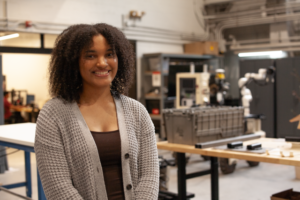
Looking ahead, Da Costa is interested in expanding how people think about robotics and AI, not as purely technical systems but as tools that engage the full human experience.
Her dream project blends sensory interaction, touch, scent, language and emotion into a device that encourages growth in a more intuitive and human way.
We rely heavily on cognition, but we underuse our senses, she said. There is so much potential there.
It is a vision that reflects her broader philosophy: Technology should not distance people from themselves. It should deepen their connection to what makes them human.
Caribbean Girl Magic, Redefined
At its core, Da Costa’s story is about presence, taking up space in rooms where Caribbean women have historically been underrepresented and doing so with intention, intellect and cultural awareness.
Her message to the next generation is both grounding and expansive.
You are never as alone as you feel, she said. You carry your ancestors with you. Every day is a chance to learn more about yourself and move closer to your purpose.
In a world that often demands certainty, Beverley Da Costa stands as proof that there is power in exploration, in questioning and in building something entirely one’s own.
And in that, there is undeniable Caribbean girl magic.