
Inclusive Books for Children’s latest Report reveals persistent gaps in whose stories reach young readers. Caribbean-heritage creators featured in its Own Voices booklist show why both authors and illustrators belong in that conversation.
Children deserve stories that make room for them, not only to recognise themselves but also to imagine everything they could become. Yet Inclusive Books for Children’s Excluded Voices 2026 Report reveals a continuing gap between the diversity of young readers and the characters at the centre of their books.
Of the 2,189 children’s books traditionally published in the UK in 2025 within the categories studied, just 150, or 6.9%, featured main characters from the marginalised groups examined. Fewer than half of those books, 73, were by British “Own Voice” creators.
For Caribbean readers, the Report offers both a reason to celebrate the storytellers making space for our communities and a reminder that individual achievements do not erase wider inequalities.
Looking Beyond Who Appears on the Page
The Report examines baby and toddler books, picture books and fiction for younger children aged 1 to 9. Its analysis considers representation across ethnicity, disability and neurodivergence, alongside an important question: who gets to create these stories?
IBC uses “Own Voice” to describe authors or illustrators who share a marginalised identity with their main characters. A book qualifies when at least one creator in an author-illustrator pairing shares that identity. The framework recognises that representation involves both the characters children encounter and the perspectives behind them.
This distinction matters in an industry where a growing proportion does not necessarily mean more books. Although the share of titles featuring marginalised main characters increased in 2025, their actual number fell by 8%. The overall number of books published within the categories studied declined more sharply, by 14.3%.
What the Findings Mean for Caribbean Readers
Just 47 books in the study featured Black main characters, representing 2.1% of the total and a 7.8% decline from 2024. For comparison, the Report cites 2021 Census data showing that around 8.5% of children aged 1 to 9 in England and Wales were of Black heritage.
These figures are not a count of Caribbean representation. The Report’s Black category encompasses African and Caribbean descent, while South Asian and other identities are examined separately. It does not provide a standalone measure of Caribbean characters or creators.
[Additional Read: Guyanese Children’s Author Shabana Lall on Culture, Food and Representation in Books ]
The findings also vary by format. Picture books with Black main characters fell by 25.7% in 2025, a decline the Report says came entirely at the expense of British Own Voice authors and illustrators. Fiction for younger children showed a partial recovery, with books featuring Black main characters increasing by 70% to 17 titles. The Report also includes four Caribbean creatives.
Four Caribbean-Heritage Creators in the Report’s Booklist
Appendix 2 highlights exemplary books published in 2025 that demonstrate Own Voice representation of main characters. Among its selections are three books connecting four Caribbean-heritage creators across writing and illustration.
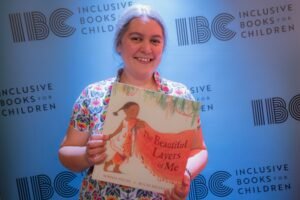
Sophia Payne: The Beautiful Layers of Me
Sophia Payne’s The Beautiful Layers of Me, illustrated by Ruchi Mhasane, appears in the Report’s picture book selection for ages 3 to 7.
Payne’s literary agency describes her as having Guyanese and British heritage, with writing that reflects her Indo-Caribbean background. Her inclusion brings an Indo-Caribbean voice into this celebration of the region’s wider literary diaspora.
Chanté Timothy: Supa Nova
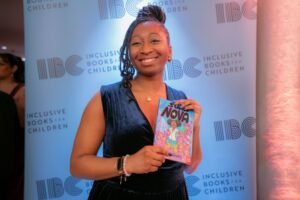
Chanté Timothy’s Supa Nova appears in the children’s fiction selection for ages 5 to 9. Timothy is both its author and illustrator.
An illustration agency profile identifies her as Black British Caribbean. Her place in the booklist highlights a creator whose storytelling spans words and images, reinforcing the Report’s attention to both forms of creative authorship.
Mariesa Dulak: The Silver Shadow
Mariesa Dulak’s The Silver Shadow, illustrated by Alea Marley, appears in the picture book selection.
On her official website, Dulak explains that the story was inspired by her father’s childhood adventures in Barbados. That connection offers a direct example of Caribbean family experience informing a book featured in the Report.
Alea Marley: Illustrating The Silver Shadow
Alea Marley is credited as the book’s illustrator on page 29. Dulak’s official account confirms that Marley, like Dulak herself, has family roots in Barbados. You can also explore Marley’s illustrator profile.
Recognising Marley separately matters because the Report explicitly includes illustrators within its definition of Own Voice creators. A conversation about whose perspectives shape children’s books must make room for visual storytellers alongside writers.

More Than a Story About Difference
The Report also highlights “incidental representation”, in which a character’s marginalised identity is present without driving the plot. Books about culture and identity have a place, but so do adventures, friendships and everyday experiences in which children simply get to be the protagonists (pages 3 and 11-12).
As early years consultant and author Dr Stella Louis asks:
Why can’t a child simply be South Asian, disabled, neurodivergent or bilingual and also be the hero of an ordinary story about friendship, adventure, loss or joy?
For Caribbean families, this offers a useful way to think about belonging on the bookshelf: not one definitive Caribbean experience, but room for many identities, perspectives and possibilities.
A Responsibility Beyond Individual Books
Excluded Voices 2026 makes us questions the institutions shaping children’s reading, from publishers and booksellers to librarians, educators and parents. Their decisions influence which voices receive support and which stories children can access.
Celebrating Payne, Timothy, Dulak and Marley is one part of that conversation. The larger challenge is to ensure that inclusive publishing does not depend on isolated successes, but on sustained opportunities for creators and a broader world of stories for every child.