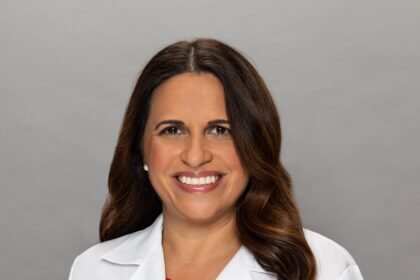

There is an exhaustion that comes with having to explain your own existence. For Dr Aurora Herrera, Course Lead for the BA Journalism programme at London Metropolitan University and a proud daughter of Trinidad and Tobago, that exhaustion became the catalyst for research challenging how Britain understands the Caribbean.
Since arriving in the UK in 2016 to pursue her Ph.D. Herrera says she has repeatedly been met with disbelief when she tells people she is from the Caribbean – the response is often surprise and sometimes outright doubt. British folks have told her that she does not look or sound like what they expect a Caribbean person to be.
That gap between reality and assumption became impossible to ignore. It set her on a path towards research centred on Indo Caribbean history, identity and representation in the UK and Europe.
I was absolutely gobsmacked that in 2026, the British public is mostly unaware of the diversity of a place with more than 40 million people, she says.
A Region Shaped by Many Histories.
The Caribbean’s story is not singular, and Herrera is emphatic about that. The brutality of colonisation by Britain and other European powers – the near destruction of Indigenous peoples, the barbarity of African enslavement and the harsh conditions of indentureship – left the region a patchwork of Spanish-, French-, Dutch- and English-speaking islands and territories. Language and customs from the indigenous peoples, Indians, Africans and Chinese also became embedded into the local vernacular. As a result, modern day Caribbean islands are multiethnic and multicultural at their core.
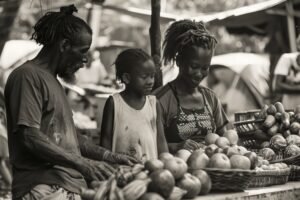
This photo is a traditional Caribbean market scene. The region’s diversity extends beyond the images commonly associated with it, a gap Dr. Aurora Herrera’s research into Indo-Caribbean representation seeks to address in the UK.
Herrera’s family history reflects that layered past. Her father’s side descends from Indian indentured labourers who arrived in Trinidad in the 1800s. Her mother’s side traces back to the Indigenous Carib people of Trinidad and the Warao people of Venezuela, with Spanish, Irish and African ancestry woven in as well.
At home, she says, the family simply identifies as Trinidadian. They celebrate Christmas, Diwali, Emancipation Day, Eid and Chinese heritage festivals alike because that blending is what being Trinbagonian has always meant.
Indentureship is central to Herrera’s current academic work. Between 1838 and 1917, close to half a million Indians and Chinese were transported to the British Caribbean under the system of indentureship after the abolition of slavery, forming the foundation of Indo-Caribbean communities in countries including Trinidad, Guyana, St. Lucia, Jamaica and Grenada. Yet, Herrera argues, this chapter of British colonial history remains poorly understood in the UK, despite this country’s significant role. The legacies of this history extend to Britain itself, particularly through migration from the Caribbean during the Windrush era, when descendants of indentured labourers were among those who made the UK their home.
When she began investigating the disconnect, Herrera traced it to media content and government messaging in the UK, which she says communicate “a very myopic view of Caribbean diversity.”
Her concern is not abstract. Indo-Caribbean people, alongside Sino-Caribbean and other communities, are at risk of erasure in Britain. When a group goes unacknowledged, she says, its people suffer.
[Additonal Read: Caribbean Heritage in Every Page: The Visionary Founder of Nine Mile Babies ]
From the Newsroom to the PhD.
Herrera’s path into this research began long before she arrived in the UK. She began her journalism career at 14 as an intern at the Trinidad Guardian, later interning at Gayelle: The Channel before studying journalism at the University of Toronto.
As she grew older, she became increasingly aware of the pressures facing journalists in Trinidad and Tobago. The challenge was not always overt violence, she says, but censorship, restrictive media laws, political influence and the complicated relationship between business interests and media ownership.
That awareness led her to pursue a PhD in journalism culture and media law.
View this post on Instagram
Why Representation Cannot Wait.
Herrera connects her current research to a wider pattern of who gets studied and who does not. There is, in her words, “a dearth of research on the Caribbean and its people,” and closing that gap matters for the entire community.
But she is especially direct about why the issue carries particular weight for Caribbean women. Long-standing patterns of marginalisation have left women’s experiences underrepresented in research, health care conversations and academic spaces.
Expanding that research, she argues, is how the community can strengthen its presence and reaffirm its place in Britain’s national story.
Inside the Research.
Herrera’s current project examines the lack of Indo-Caribbean representation within the UK’s Windrush narrative. It moves on three fronts:
- She is interviewing members of the Indo-Caribbean community about migration, identity, belonging and family history.
- She is speaking with journalists, editors and media professionals to understand how editorial decisions are made when covering Caribbean communities and whose voices are included or excluded.
- She is analysing media coverage, imagery and newspaper archives to track how Caribbean communities have been represented in relation to Windrush and wider British society.
- FOLLOW UP ON PHOTOS
The research has already surfaced findings Herrera believes the Indo-Caribbean community needs to hear.
- History and geography in a person’s country of origin shaped quality of life and settlement patterns for Indo-Caribbean people after they arrived in the UK.
- Indo-Caribbean people largely do not feel represented in UK media. Many interviewees say they have never seen media content that reflects their image or contribution to the culture.
- There is a persistent conflation of “Windrush” and “Caribbean” in British public consciousness, one Herrera says must urgently be untangled.
Public imagery and political narratives, she says, have focused on one part of a much broader story.
My research is not about taking space away from anyone, she says. It is about making space for all Caribbean people in the UK.
The Weight of Invisibility.
The strongest theme running through Herrera’s interviews is one word: invisibility.
Interviewees repeatedly tell me, ‘When I say I’m Caribbean, nobody believes me,’ she says. As both a researcher and a Caribbean woman, that is incredibly painful to hear. Everyone deserves to feel they belong. Nobody should feel erased from their national story.
That invisibility carried consequences far beyond hurt feelings during the Windrush scandal. Many Indo-Caribbean people did not initially realise the scandal affected them because they had never seen themselves represented in Windrush imagery or language.
Part of that erasure is embedded in the system itself. There has never been an explicit Indo-Caribbean category in official UK records, including the modern census, meaning the community’s lack of visibility is not only cultural but administrative.
The Weight of the ‘Other’ Box.
Perhaps the most striking obstacle Herrera has encountered is the lack of data on the Indo-Caribbean community and other Caribbean ethnicities. That gap exists because such groups are not formally recognised as distinct ethnic categories.
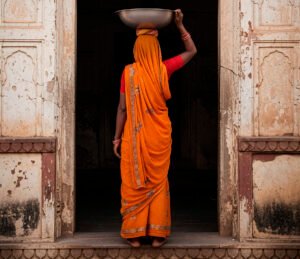
Again and again, interviewees told her they must select “Other” on official forms and then write “Indo-Caribbean” by hand, a workaround many have relied on for decades.
The lesson here is that there is still work to be done and that the people who should be listening have yet to properly hear this group, Herrera says.
Tracing that history presents its own challenges. Indentureship records are fragmented, and many families changed names or converted religions after arriving in the Caribbean, making migration histories difficult to reconstruct.
There is also an emotional cost. Researchers are trained to remain objective, but Herrera says listening to people describe racism, rejection and generational pain can be heartbreaking. Sometimes, she needs to take breaks from the research to maintain her emotional health and balance.
Her recommendation for researchers, health care professionals and community organisations is simple: show up, pay attention and listen to the Caribbean community, especially women. Just as importantly, do not hoard knowledge, connections or resources that could help others.
We are all sharing the same goal, so working together is key, she says.
Building Something Bigger.
That instinct shapes her long-term ambitions for the research. Herrera wants all members of the Caribbean community to feel seen and be acknowledged. To this end, she has started a petition to include Indo-Caribbean as an ethnic group on government documents: https://petition.parliament.uk/petitions/779930
In addition, in order to address the lack of knowledge around indentureship as well as the Indo-Caribbean and Sino-Caribbean communities, she has started a petition to have indentureship taught in the UK curriculum: https://petition.parliament.uk/petitions/780080
She is also determined that her findings will be accessible to the public. As both a researcher and working journalist, she wants the work to reach the public through media coverage and accessible storytelling. She is adamant about breaking down the gatekeeping practices of traditional academia.
I tell every participant that this is not just my research, she says. It belongs to the community.
Looking ahead, Herrera hopes to bring participants, researchers, journalists, educators and community organisations together through launch events and shared conversations. Her goal is to connect people who are often doing similar work without knowing one another exists.
A Message for the Community.
Herrera knows that participating in research, particularly research that asks people to revisit painful histories and questions of identity, takes courage.
Her message to Caribbean women who may hesitate is rooted in continuity and legacy.
Your voice is exceptionally important. Without you, this work cannot be fully complete, she says. We are all connected to the women who came before us and who carved out the space we have now. We need to continue doing this for future generations.
Her hope is both specific and deeply personal: a future where no Caribbean person has to justify their identity, where no one is met with blank confusion or made to feel invisible simply for existing as they are.
For the Caribbean women reading Caribbean Collective Magazine UK, her closing words carry the quiet resilience that runs through her work.
I feel like I am holding the hands of the women who came before me. Long live Caribbean woman magic. If we continue holding each other’s hands, that line of strength and possibility will never be broken.
We’ve got this, she says. We have each other and are more than equipped to go all the way. Those who came before us did it, and so can we.
To learn more about Herrera’s research or to be a part of it, please contact @a.herrera@londonmet.ac.uk