
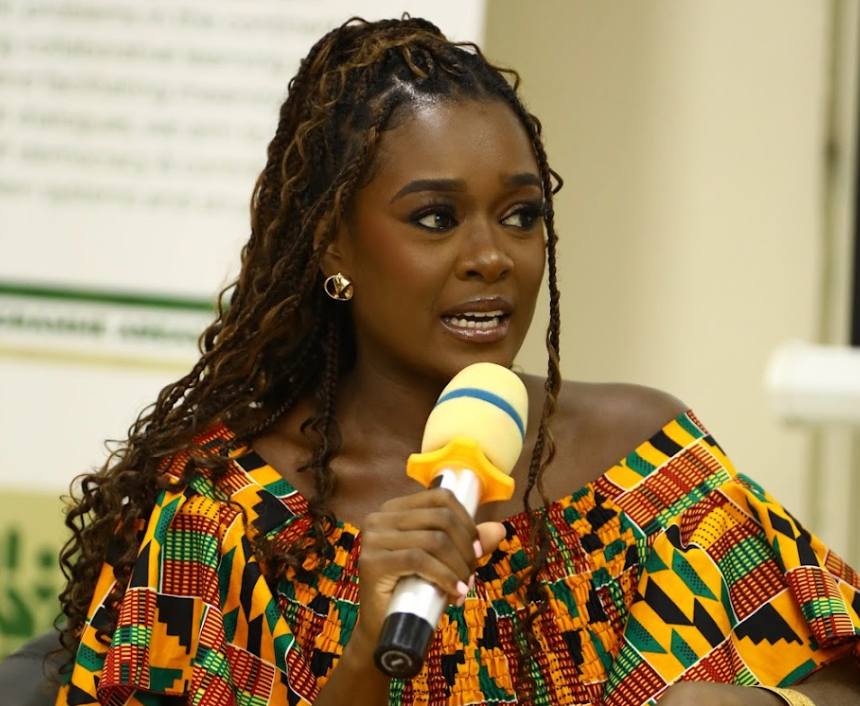
There is something quietly radical about a woman who decides, at 22, that the entire British education system needs to change and then actually does something about it. Lavinya Stennett, founder and CEO of The Black Curriculum, author and cultural entrepreneur, didn’t arrive at her life’s work through a smooth, linear path. She arrived through expulsion, through years outside the classroom, and eventually through a first class degree in African and Development Studies that gave her something schools rarely hand to Black girls: a truthful mirror.
- It was the first time my education had given me an empowering perspective on African contributions to the world, she said. I wanted to take my learning experience into all schools and give young people a sense of identity.
- My Jamaican heritage shapes everything about how I approach life and education and family and community and also resistance. The biggest part of my identity is that resistance piece. That is shaped by the women in my lineage and the active memory of resistance histories.
- [Additional Read: How a Guyanese British Henna Artist Is Reclaiming Her Indo Caribbean Identity, One Design at a Time]
- Caribbean culture is seen through the lens of colonial extraction the modern day tourist industry and solely entertainment. When we think about the years of revolution and mobilization that actually created the foundation for Caribbean history — for that to be skipped over for a narrative that is more palatable to the white gaze, it really frustrates me.
- As women, it is our role as creators to continue legacy. Documenting and teaching our history is a distinct type of heritage that continues anchoring ourselves as carriers of culture. I think it’s an act of care and an act of love.
- I allow myself to make mistakes publicly and openly. I have more compassion now. I allow myself to fail forward and allow people to see my journey without taking in their views. I’m the only one that’s living it so I have to give myself grace and enjoy the journey.
- Be playful and be bubbly. Whatever situation you are growing out of, it doesn’t have to eclipse who you are at heart. Retain the child in you and hold her close.
It was the first time my education had given me an empowering perspective on African contributions to the world, she said. I wanted to take my learning experience into all schools and give young people a sense of identity.
That desire became The Black Curriculum a U.K. based organization that has since grown into a national force for policy change, reshaping conversations about what gets taught, what gets erased and who gets to decide.
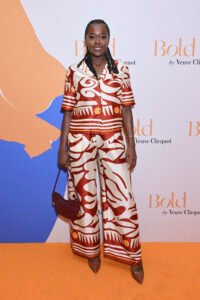
Roots, Resistance and Jamaican Heritage
For Caribbean women in the U.K., there is an immediate intimacy to Lavinya’s story. She is of Jamaican heritage both parents from the island and she carries that lineage not as decoration, but as direction.
My Jamaican heritage shapes everything about how I approach life and education and family and community and also resistance. The biggest part of my identity is that resistance piece. That is shaped by the women in my lineage and the active memory of resistance histories.
That word, resistance, sits at the center of everything she builds. It’s not anger for anger’s sake. It’s something older, more intentional, inherited from women who understood that survival required more than endurance. It required memory.
And memory, she argues, is precisely what the British curriculum has long tried to erase. When Stennett founded The Black Curriculum in 2019, she saw a system built on Eurocentrism that produced not just ignorance, but division. “There was no actionable and mandatory force in the U.K. to challenge the national curriculum,” she said. “And no way to redress the lies … which causes a lot of social division and racism.”
[Additional Read: How a Guyanese British Henna Artist Is Reclaiming Her Indo Caribbean Identity, One Design at a Time]
What Gets Left Out and Why It Matters
One of the sharpest edges of her work is in naming what we’ve been sold as Caribbean identity versus what Caribbean identity actually holds. The tourist brochures. The reggae playlist. The food, always the food. Stennett isn’t dismissing any of it, but she refuses to let it be the whole story.
Caribbean culture is seen through the lens of colonial extraction the modern day tourist industry and solely entertainment. When we think about the years of revolution and mobilization that actually created the foundation for Caribbean history — for that to be skipped over for a narrative that is more palatable to the white gaze, it really frustrates me.
There is so much more, she insists. And Caribbean women, specifically, have a role in making sure it isn’t lost.
Caribbean Women as Generational Orators
When asked why Caribbean women in particular must be the ones to document and teach our histories, Stennett’s answer is culturally resonant.
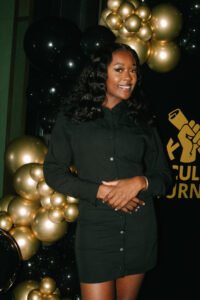
As women, it is our role as creators to continue legacy. Documenting and teaching our history is a distinct type of heritage that continues anchoring ourselves as carriers of culture. I think it’s an act of care and an act of love.
It’s the kind of framing that shifts the work from obligation to devotion, not a burden we carry, but a gift we give to our daughters, our communities and ourselves.
Failing Forward in Full View
Building a nationally recognized organization while Black, while female, while young, is its own kind of education. Stennett speaks honestly about the pressures of visibility and what it took to stop shrinking under them.
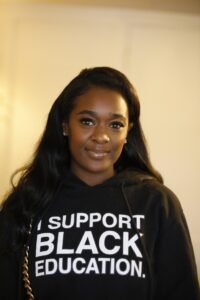
I allow myself to make mistakes publicly and openly. I have more compassion now. I allow myself to fail forward and allow people to see my journey without taking in their views. I’m the only one that’s living it so I have to give myself grace and enjoy the journey.
It’s the kind of grace that doesn’t come easily, especially for Black women taught to perform perfection in spaces that weren’t built for them. But Stennett preservers.
What She’s Building Next
With a poetry collective now growing in Ghana and music on the horizon, Stennett’s vision has always extended beyond Britain’s borders. Her long term goal for The Black Curriculum is to become a global vehicle for young people’s creative and professional development one that centers Black and African contributions not as a supplement to “real” education, but as its foundation.
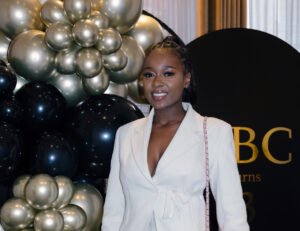
And for the young Caribbean girls watching her journey from classrooms, living rooms and the margins of systems that weren’t designed with them in mind? Her message is retain the softness not afforded to Caribbean women taught to be strong even from childhood.
Be playful and be bubbly. Whatever situation you are growing out of, it doesn’t have to eclipse who you are at heart. Retain the child in you and hold her close.
In a world that rushes Black girls into seriousness and adulthood, that is its own kind of revolution.