
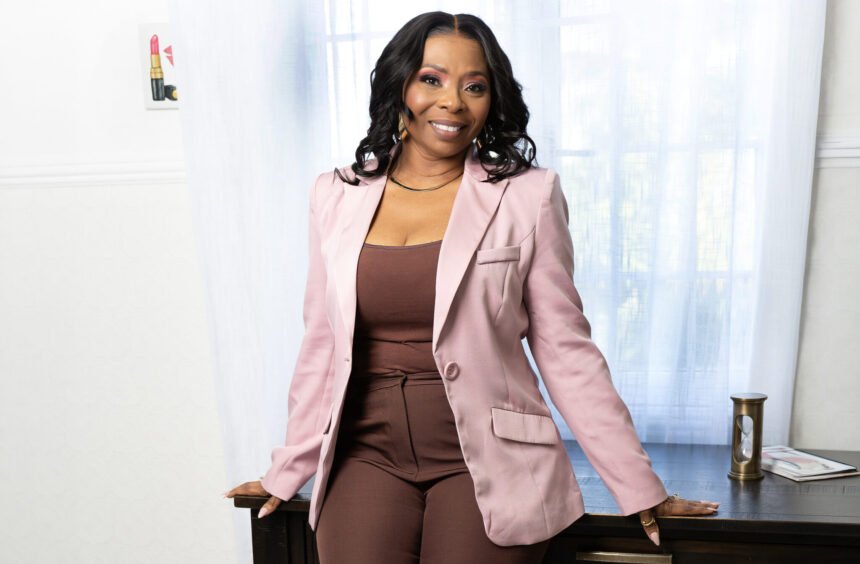
There is a particular kind of woman who doesn’t just succeed despite where she comes from but because of it. Shelly-Ann Aqui Solomon believes she’s that woman and will be the first to tell you so.
- From Church Auditorium to 34 Countries
- [Additional Read: Inside the Legacy of Desha Rambhajan-Malli: Trinidad’s Most Beloved News Anchor ]
- The Competitive Edge Nobody Talks About
- People have asked me over the years whether I’ve considered toning things down. My answer has always been no. Being Caribbean is my competitive edge.
- You need to be excellent, competent and skillful. Those are very different requirements, and only one route requires you to erase yourself.
- The Turning Point Was a Small Child
- Systems Are How You Protect the Art
- The Work the World Hasn’t Found Yet
- Caribbean voices are still largely absent from the global business education conversation. We are an afterthought in most international curricula. That is a gap, and my work is focused on directly correcting it.
- Visibility as Responsibility
- Visibility, at this stage of my career, is not about popularity. It is about what becomes possible for someone else when she sees an identifiable picture of possibility: accent intact, culturally rooted, unapologetic, successful, and realizes this is also what leadership looks like.
- The Hardest Lesson
- The Legacy She’s Built
- I want a woman somewhere in the Caribbean or diaspora who has been told repeatedly that her background limits her, to hear my name and feel that none of that is true.
- The real measure is not revenue. Not coverage. Whether the thinking outlasts the teacher.
Born and raised in Central Trinidad, Shelly-Ann grew up navigating two very different economic realities within her own family. One side affluent and established, the other working class and hustling. Long before she became a serial entrepreneur and the leader of a dynamic community of Caribbean businesswomen, she was already learning what money can and cannot do for a person’s sense of self, their dignity, and their choices. “This lesson wasn’t from a textbook,” she says. “It came from observing the people I loved navigating both realities.”
That early education in contrast would become the foundation of everything she built.
From Church Auditorium to 34 Countries
Before Solomon became one of the Caribbean’s most respected business coaches, she was building something entirely different: a performing arts academy that would eventually grow into a cultural institution. Trained at Berklee College as a vocal production and stylistic specialist, she founded PRVM in Trinidad and hosted the Ruby Awards for 14 consecutive years, growing the ceremony from a modest church auditorium to the hallowed stages of Queen’s Hall and NAPA. She graduated thousands of students and eventually served as head judge for the GMATT Awards, the Gospel Music Awards of Trinidad and Tobago.
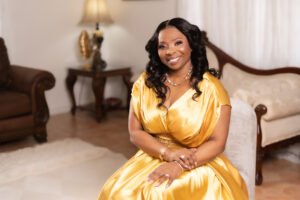
Then, in a move that required both courage and clarity, she closed that chapter deliberately. She sat down, mapped out everything she had learned about building a profitable business from almost nothing, turned those insights into frameworks and methodology, and began teaching it to other entrepreneurs. That pivot became Shelly Aqui Coaching and Consulting, and over 27 years, she has coached thousands of clients across 34 countries without ever leaving her island.
“My first international sale came from Florida,” she recalls. “It was game over from then on. I learned it wasn’t about the currency. It was about the process.”
She started with $40. Forty dollars. And turned it into a seven-figure (TTD) business.
[Additional Read: Inside the Legacy of Desha Rambhajan-Malli: Trinidad’s Most Beloved News Anchor ]
The Competitive Edge Nobody Talks About
In an era when Caribbean professionals are still sometimes encouraged to neutralize their accents and soften cultural references for international audiences, Shelly-Ann has consistently moved in the opposite direction.
People have asked me over the years whether I’ve considered toning things down. My answer has always been no. Being Caribbean is my competitive edge.
Solomon isn’t being sentimental. She is being strategic. The tenacity, creativity, and resilience that characterize Caribbean entrepreneurship are, in her assessment, qualities forged under genuine pressure. “When you build a business in the Caribbean, it’s like fighting against gravity. No ready-made ecosystem, no generous startup culture, no automatic networks.” That resistance, she argues, produces something that can’t be manufactured or imported: the ability to move fast, learn faster, and find what works when you can’t afford a long runway.
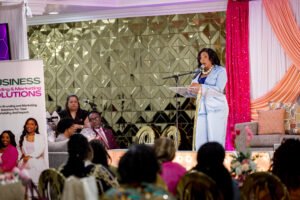
Code-switching, she says plainly, has a real cost that rarely gets named honestly. “It is exhausting. Performing a version of yourself that was designed for someone else’s comfort takes energy that should be going into your work, your clients, your family, your thinking.” More than the personal toll, she identifies what it does to the work itself. The thing that made you distinct gets filed down in the process. You become another interchangeable voice in an already crowded room.
Her alternative is not bravado. It is competence.
You need to be excellent, competent and skillful. Those are very different requirements, and only one route requires you to erase yourself.
The Turning Point Was a Small Child
Ask Solomon when she decided to bet on herself, and she doesn’t point to a business milestone or a market opportunity. She points to her daughter.
“She was small, and I was watching her grow in the shadows of a schedule that wasn’t built around her. I felt like I was visiting her life.” That single image, of a limited presence in her own child’s daily world, was enough. She decided to design a life that gave her both time freedom and financial independence, starting with $40 (TTD) and a geographic location that wasn’t easy to access.
What she discovered in that constrained beginning surprised her. “When there is very little to lose, you stop hesitating. You move quickly, you learn quickly, you find out what works because you cannot afford a long runway. That urgency, which looked like a disadvantage, turned out to be one of my greatest assets.” While Solomon’s husband has been supportive throughout their 35 years of marriage, building her business has fostered her own sense of identity and confidence. “I needed that for my own sense of self.”
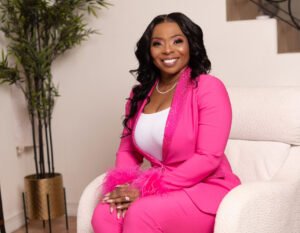
Systems Are How You Protect the Art
One of the most persistent myths in creative industries, Solomon argues, is the idea that artistry and business sustainability are fundamentally in conflict. She has watched that myth keep talented Caribbean women financially small for years.
“The tension, when it exists, is not a fundamental incompatibility. It is the absence of systems strong enough to hold both.” Her performing arts academy was simultaneously deeply creative and rigorously structured. Production schedules, tuition structures, revenue targets, artist development, none of it diminished the work. The structure gave creativity room to breathe.
What she teaches to coaches, creatives, medical and beauty service providers, and speakers is simple: your gift is the product, your systems are the business. “If your gift is extraordinary and your business is chaotic, you will be a brilliant, exhausted, financially unstable person who eventually burns out and stops sharing that gift entirely. That helps no one.”
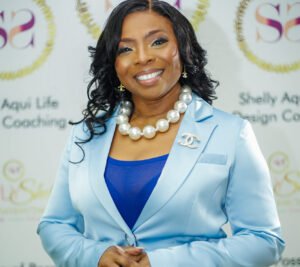
The Work the World Hasn’t Found Yet
When asked about the body of work she feels is still underdiscovered, Shelly-Ann doesn’t hesitate. It is her methodology, Life by Design: The Feminine Method, and she explains why with the precision of someone who has been thinking about this gap for a long time.
The business strategy layer is visible, the marketing, the sales, the positioning. But beneath it is a complete philosophy for how a woman structures her entire life: financial freedom, time freedom, and relational freedom, all three, simultaneously, without sacrificing one for the others.
“What the global conversation hasn’t caught up to yet is the Caribbean-specific depth of this work,” she says. “I built it for women operating inside cultures that actively code them to shrink, to self-sacrifice endlessly, to serve every other vision before their own.” The methodology was tested on real Caribbean women in real Caribbean conditions, accounting for family expectations, resource limitations, infrastructure gaps, and social dynamics that large-market frameworks simply don’t address.
Caribbean voices are still largely absent from the global business education conversation. We are an afterthought in most international curricula. That is a gap, and my work is focused on directly correcting it.
Visibility as Responsibility
Shelly-Ann has spent most of her career actively avoiding visibility, a fact that might surprise anyone who encounters her commanding presence on a stage or a platform. But she is deliberate about the distinction between wanting to be seen and wanting to normalize Caribbean women being seen.
“When I occupy space on a platform, on a stage, or on a cover, I carry every woman, especially those of my phenotype, who was told that space was not meant for her.” She has watched in real time what happens when a woman from a Caribbean island sees someone who looks and sounds like her holding that space with full authority. Something unlocks. The girl coming up behind them grows up without evidence of what she can become, she warns, and that absence has consequences that ripple through generations.
Visibility, at this stage of my career, is not about popularity. It is about what becomes possible for someone else when she sees an identifiable picture of possibility: accent intact, culturally rooted, unapologetic, successful, and realizes this is also what leadership looks like.
The Hardest Lesson
Building a brand across 27 years teaches you many things. “In building mode, your energy is outward. Growth, reach, new clients, new content, new communities.” At a certain point, Solomon says you are no longer just building a business. You are shielding a generational foundation. “The circle has to be managed. Access has to be earned. Proximity has to be purposeful.”
She speaks candidly about the opportunists that significant success attracts: people who position themselves close to a business, a reputation, or a marriage not out of care but out of interest in what they can extract or dismantle. “The hardest lesson has been developing the discernment to identify that early, the wisdom to understand what is actually at risk, and the boundaries to act decisively on what I see without guilt and without apology.”
The Legacy She’s Built
Five years from now, Shelly-Ann wants women to feel something specific when they hear her name. Not vague inspiration. Something more precise: a grounded, evidence-based conviction that their Caribbean culture, their resources, their gender, and their background do not place a ceiling on what they can build.
I want a woman somewhere in the Caribbean or diaspora who has been told repeatedly that her background limits her, to hear my name and feel that none of that is true.
The legacy she is building is a movement: Caribbean women who are economically self-sufficient, professionally fearless, and committed to raising the next generation. Women who build families where daughters are not raised to make themselves small, and sons are not raised to expect it. Frameworks and methodology that still work in someone’s business long after she is done teaching them.
The real measure is not revenue. Not coverage. Whether the thinking outlasts the teacher.
She closes with the same directness she brings to everything: “Caribbean women are not behind the curve. Stop waiting for confirmation. Take your place. Lock arms. Move forward with focus. You are Caribbean and you are capable.”
After 27 years, 34 countries, and thousands of lives shaped, Shelly-Ann Aqui Solomon isn’t slowing down. She is just getting started on the part that lasts.