
For emerging Haitian artist Miles Hart, photography is not simply about documenting what is visible. It is a way of tracing memory, confronting inherited histories, honoring community and making space for the contradictions that shape Haitian identity across generations and borders.
- I want visitors to really sit with the photos and see themselves in them, he says. This isn’t just my family. This is your family, too your experiences, too.
- A Portrait of Purpose
- She’s meant the world to me, Hart says. Her consistent fight and pride in her country inspired me not only to make this exhibit, but to learn my people’s history deeper than just the revolution.
- [Additional Read: Calibe Thompson Makes History as Founder of the First Caribbean Museum in the United States]
- She really cares about people learning, he says.
- History, Rupture and Resistance
- The idea for ‘Shattered Altars’ came while I was watching a slow-motion video of an explosion, he says. There’s a period of impact right after the initial explosion where the shards are suspended in the air. That’s what I was trying to recreate.
- As I sit at a café and the French serve me sugar with my coffee, I think about where that sugar came from, he says.
- I feel like I’m not supposed to love France, or French culture, as much as I do, he says. The more I learn, the more that view shifts.
- Finding Community in Unlikely Places
- It doesn’t matter what the man in it looks like, Hart says. What matters is that he’s wearing a Steelers jersey.
- When you get an opportunity like this, it’s bigger than you,he says.
- A Flag That Flies High
- The deliberate duplication allows for an entirely new meaning to take shape, Hart says.
- When I look at the repetition of the Haitian flag, I say to myself: My flag flies, he says. My flag flies strong. My flag flies high.
- Language diversity is a necessity in our world, Hart says. It’s one we shouldn’t take for granted.
- Making Art From Lived Experience
- It taught me to think critically about what’s in front of me, and how I can recreate it through my own experience, my own eye, my own twist, he says.
- A lot of people are creating things for clicks, for recognition, he says. But I think the people who actually see themselves in their art, who have a burning, insatiable desire to create, are the ones who end up producing exhibitions from a place of truth rather than chasing validation.”
- A photograph freezes life into a silent moment and captures it forever, without asking permission, he says. It takes, and it keeps.
- It may be a while before I put anything else out, he says. But I want to be fully in tune with whatever comes next.
In his first exhibition, “Bèl Dezòd,” on view virtually through Sept. 30 at the Haitian American Museum of Chicago, Miles Hart brings together photography, collage, visual art and cinematic thinking to explore a world he describes as a “beautiful mess.” Proceeds from the exhibition benefit HAMOC and the Immigrant Family Services Institute. Proceeds from the exhibition benefit HAMOC and the Immigrant Family Services Institute. The exhibition moves through family, migration, fandom, language, resistance, Blackness and the layered realities of being Haitian in the diaspora.

Photo courtesy by Miles Hart.
At its heart, “Bèl Dezòd” is deeply personal. Yet Hart hopes audiences will recognize themselves in the images, too.
I want visitors to really sit with the photos and see themselves in them, he says. This isn’t just my family. This is your family, too your experiences, too.
A Portrait of Purpose
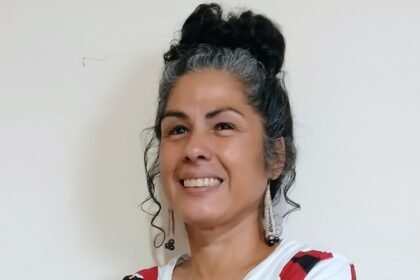
Among the works that hold particular meaning for Hart is his portrait of Gerdine, a woman whose commitment to education, community and Haiti has profoundly influenced him.
She’s meant the world to me, Hart says. Her consistent fight and pride in her country inspired me not only to make this exhibit, but to learn my people’s history deeper than just the revolution.
Gerdine’s presence encouraged Hart to reconnect with Haitian Creole, his family, his larger community and his ancestors. For more than two decades, she has been a pillar of her community, guided by a belief in education and growth. Her journey from Haiti to the University of Chicago is one Hart sees as both remarkable and painfully complicated, especially amid the uncertainty surrounding her citizenship battle under the current administration.
[Additional Read: Calibe Thompson Makes History as Founder of the First Caribbean Museum in the United States]
For Hart, the portrait captures Gerdine’s duality: softness and tenderness paired with strength, seriousness and a clear sense of purpose. It is the look of someone who expects more from the world, particularly for the students and people she has devoted her life to serving.
She really cares about people learning, he says.
History, Rupture and Resistance
The emotional center of “Bèl Dezòd” lies within “Shattered Altars,” a section Hart describes as the narrative core of the exhibition. Inspired by slow-motion footage of an explosion, the series focuses on the split second after impact, when fragments are suspended in the air.
Hart was not interested in the rubble or the aftermath. Instead, he wanted to capture the charged moment of rupture itself.
The idea for ‘Shattered Altars’ came while I was watching a slow-motion video of an explosion, he says. There’s a period of impact right after the initial explosion where the shards are suspended in the air. That’s what I was trying to recreate.
That sense of fragmentation is personal as well as political. As a Haitian artist, Hart sees resistance as something deeply embedded in his lineage. Works such as “Pa Gen Fèt” carry that spirit, but it is “Lèse Tonbe,” meaning “let it fall,” that stands out most strongly for him.

Photo courtesy by Miles Hart.
Set against a striking sunset, the photograph reflects Hart’s own complicated relationship with Paris and France. While living in the city, he found himself reckoning with the legacy of Haiti’s colonial exploitation, including the wealth extracted from Haiti following its independence.
As I sit at a café and the French serve me sugar with my coffee, I think about where that sugar came from, he says.
For Hart, receiving sugar in Paris becomes a reminder of the human cost behind colonial wealth and plantation economies. His love for French culture exists alongside the painful knowledge of Haiti’s history with France, creating a paradox he cannot ignore.
I feel like I’m not supposed to love France, or French culture, as much as I do, he says. The more I learn, the more that view shifts.
Finding Community in Unlikely Places
In “Keep Your Head,” Hart explores voice, visibility and the ways people form identities through shared symbols. One work, “Moun San Non,” examines fandom and the strange but powerful forms of connection it can create.
The photograph centers on a man in a Pittsburgh Steelers jersey in a city filled with Chicago Bears fans. On the surface, the two men may appear to have little in common. Hart remembers that the subject was white and in his mid-40s, while Hart is a young Haitian man. Yet their shared connection to the Steelers created an immediate bond.
It doesn’t matter what the man in it looks like, Hart says. What matters is that he’s wearing a Steelers jersey.
Through that jersey, the image becomes a study of how people divide and unite themselves. Sports fandom can create arbitrary lines, but it can also offer community, ritual and belonging. The work asks viewers to consider the names, labels, teams, nations and symbols they carry and what those affiliations reveal about the human need to connect.

Photo courtesy by Miles Hart.
Hart also highlights “Diu Lian,” featuring his girlfriend, Sydney, as a meaningful work in the section. Her presence, alongside portraits of his family and loved ones, reinforces that the exhibition is not a solitary project. It is a visual record of the people and relationships that shape his world.
When you get an opportunity like this, it’s bigger than you,he says.
A Flag That Flies High
If “Shattered Altars” is the emotional core of the exhibition, Hart considers “Echo” its strongest visual section. Through repetition, duplication and unconventional placement, the works transform familiar photographs into new visual languages.
The deliberate duplication allows for an entirely new meaning to take shape, Hart says.
In “Drapo sou Drapo,” or “flag on flag,” Hart sees the thesis of the exhibition come into focus. Repeated images of the Haitian flag create a visually layered statement of pride, defiance and endurance.
When I look at the repetition of the Haitian flag, I say to myself: My flag flies, he says. My flag flies strong. My flag flies high.
The work is not simply about national symbolism. It speaks to the resilience of a people whose stories are often reduced, misunderstood or framed only through crisis. In Hart’s hands, the repeated flag becomes an affirmation of Haitian pride that refuses to be diminished.

Photo courtesy by Miles Hart.
He hopes the exhibition encourages Haitian audiences to continue celebrating Haitian art, scholarship, history and language. Haitian Creole is particularly important to him, not only as a cultural marker but as a way of seeing the world.
Language diversity is a necessity in our world, Hart says. It’s one we shouldn’t take for granted.
For the wider Caribbean diaspora, he hopes “Bèl Dezòd” encourages a fuller, less limited understanding of Haiti and Haitian people. Rather than viewing the country through stereotypes or headlines alone, Hart invites audiences to encounter its complexity, creativity, intelligence, joy, grief and unshakable spirit.
Making Art From Lived Experience
Hart’s creative practice is shaped by photography, filmmaking and visual art, with each medium informing the others. He credits his first film class in 2020, taught by Mr. Gaines, with helping him understand the importance of visual history and critical observation.
Film taught him to look beyond what is immediately presented on screen and ask where an image comes from, what it represents and how it reflects the world around it. That approach now informs the way he builds photographs, constructs collages and frames stories.
It taught me to think critically about what’s in front of me, and how I can recreate it through my own experience, my own eye, my own twist, he says.
For Hart, the most important lesson of his first exhibition has been to create from the complexity of his own experience.
A lot of people are creating things for clicks, for recognition, he says. But I think the people who actually see themselves in their art, who have a burning, insatiable desire to create, are the ones who end up producing exhibitions from a place of truth rather than chasing validation.”
He believes meaningful work comes from artists willing to sit with their ideas, interrogate their images and make room for complexity.
In “Bèl Dezòd,” Hart does not try to solve the contradictions around him. He does not attempt to make the world neater, simpler or easier to understand. Instead, he documents its layers and invites viewers to confront the beauty and discomfort of what they see.
A photograph freezes life into a silent moment and captures it forever, without asking permission, he says. It takes, and it keeps.
That permanence is central to the exhibition’s power. Hart wants viewers to sit with the stories carried in each image, including the systems that determine whose voices are heard, whose experiences are erased and whose histories are allowed to endure.

Photo courtesy by Miles Hart.
As he looks ahead, Hart is already thinking beyond the gallery. He hopes to write short stories or a novel, make more films and continue creating work that centers people whose stories may otherwise go untold.
It may be a while before I put anything else out, he says. But I want to be fully in tune with whatever comes next.
For now, “Bèl Dezòd” stands as a vibrant and thoughtful introduction to an artist committed to looking closely, remembering deeply and making room for the full, complicated beauty of Haitian life.