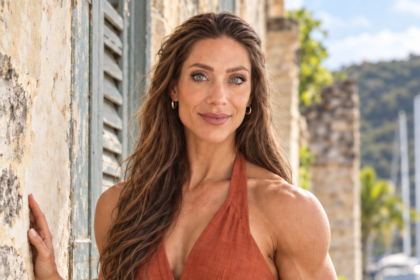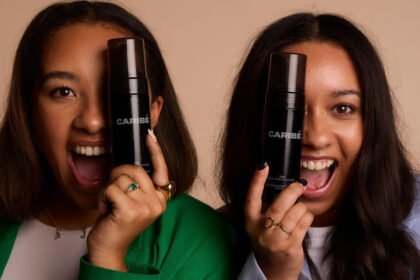

There is a photograph not on a gallery wall, not in a museum, sitting somewhere in a worn album in a Scarborough home, of a woman who crossed an ocean so that the generations after her could rest. Jephina Barkie refers to her as “Popo” (grandmother in the Hakka language). She grew up in a village in Guangdong province, China, worked rice fields under a sun that bronzed her skin and eventually boarded a ship that carried her to Jamaica, where she would raise a family, learn to speak patois with a thick Hakka accent and become the gravitational center of everything her granddaughter would one day become.
- When my grandma passed away in 2020, it became very real to me. I would no longer hear Hakka spoken in my home. I needed to preserve these memories not just on my phone, but somewhere they would live forever.
- For the first time in my entire life, I was in a fully Hakka-speaking community, she says. And for 16 days, no one called me Jephina. They called me Xiaojin. My Chinese name. I had to tune my ears to my own name.
- My mom has never been to China,” she said quietly. “I was showing her something she’d only ever heard about.
- I walked in there speaking my home Hakka—broken, mixed with patois and English—and they just… received me. Because they knew who my people were. They knew my grandparents.
- There’s nothing like a home-cooked meal from your mom. There’s built-in daycare, built-in community, and built-in care for the seniors. And you’re never lonely there is always noise, always someone. People live alone and they think that’s freedom. I look at it and think: who is catching you when you fall? In a Caribbean home, there is always a net.
- I want my son and his kids after him to know these were real people. Real lives. And I was there and I loved them and I wrote it all down, Jephina says.
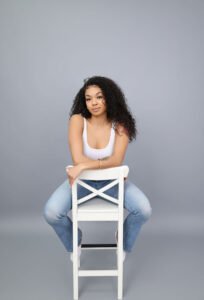
Photos courtesy of Sean Gazmin
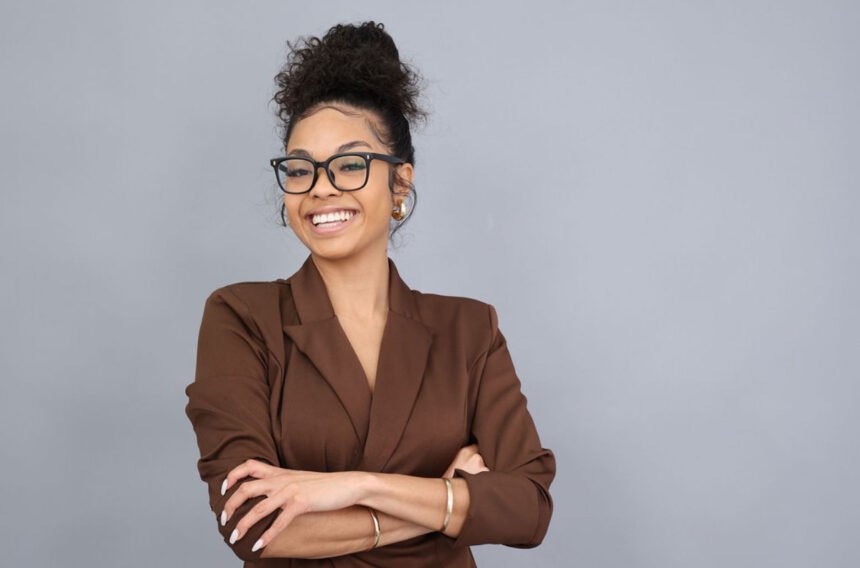
That granddaughter is Jephina, a Toronto-based content creator and cultural storyteller who has built a platform that does something rare in mainstream media: it highlights the culture and history of the Chinese Jamaican identity. Chinese Caribbeans are not just “Asian.” Not just “Caribbean.” Not just “Canadian.” Jephina is a Chinese Jamaican, Hakka-speaking, Scarborough-raised, multi-hyphenated individual in every direction. And she will tell you, without a second’s hesitation, that the love of learning about her Hakka culture is inspired by both her Popo and Gong Gong (grandfather in Hakka). She has made it her mission to document all of it before it disappears.
When my grandma passed away in 2020, it became very real to me. I would no longer hear Hakka spoken in my home. I needed to preserve these memories not just on my phone, but somewhere they would live forever.
Hakka, not just as a language, but represents a culture and its people. The word itself translates to “guest families” the Chinese who migrated from northern China, who moved south, who eventually scattered across the globe: Jamaica, Trinidad, Guyana, Suriname, Mauritius, Malaysia. They brought their dialect with them, a linguistic fingerprint of displacement and resilience and in kitchens and corner shops across the Caribbean, it quietly survived.
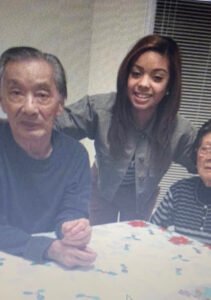
Photo courtesy of Jephina’s family
Jephina grew up being spoken to in Hakka by her grandparents, who had learned their English not in a classroom but in the hills of rural Jamaica, which is why, she says with laughter, her Popo could cuss someone out in perfect patois and follow it with a Hakka proverb. “Imagine a little Chinese lady, little Chinese man, with thick Chinese accents, but speaking patois. That was my home.”
Jephina’s Jamaican-born mother did not grow up in the same household as her parents, having been sent to Kingston while they ran a country shop. As a result, she did not become a fluent speaker, though she understands Hakka. The language did not skip a generation; rather, its transmission was altered by distance and circumstance. Many of Jephina’s aunts and uncles had similar experiences. Jephina has, unexpectedly, become a keeper of something that had nearly slipped through.
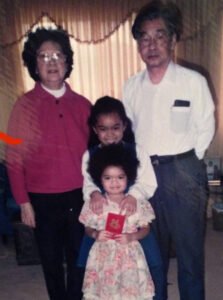
Photo courtesy of Jephina’s family
KNOW YOUR ROOTS · A HAKKA GLOSSARY
Hakka
“Guest families” the Chinese diaspora who migrated from northern to southern China, then across the world.
Popo
Grandmother in Hakka. The woman at the center of everything.
Gong Gong
Grandfather in Hakka.
Yimcha
The Hakka word for dim sum what every Saturday morning looked like in her grandparents’ house.
Xiaojin
Jlueche’s Chinese name. The one they called her in her grandmother’s village in China.
Sriiman
A Chinese-Jamaican soup dish shrimp, char siu, egg a living artifact of Caribbean Chinese cuisine.
GOING BACK
In 2023, when the creator went to China, she visited the village in Guangdong where her Popo was born. She stayed in the same building where her grandmother had once lived. She could look out the window and see what was left of the original house. It’s mud floors, walls worn down by decades of weather, was a full circle moment. Jephina felt the full weight of the distance between that life and her own.
For the first time in my entire life, I was in a fully Hakka-speaking community, she says. And for 16 days, no one called me Jephina. They called me Xiaojin. My Chinese name. I had to tune my ears to my own name.
It was the kind of moment that splits time in two. When Jephina returned to Canada and showed her mother footage from the village, her mother cried as she watched images of her own mother’s birthplace.
My mom has never been to China,” she said quietly. “I was showing her something she’d only ever heard about.
What struck her most, though, was the acceptance. Jephina is visibly mixed Black and Chinese, a heritage written plainly on her face. She half-expected to navigate some of the same friction she knew back home. Instead, the village recognized her immediately. They knew her grandparents. They knew the family name. “They were like, ‘That’s Asin’s granddaughter,'” she says. “People just lit up.” Her conversational Hakka, broken and warm and entirely her own, sealed it. She was one of them.
I walked in there speaking my home Hakka—broken, mixed with patois and English—and they just… received me. Because they knew who my people were. They knew my grandparents.
Jephina was born in Toronto to a Chinese Jamaican mother and a Guyanese-born father who was the lead singer of a reggae band. It’s a story that feels like something out of a novel about the diaspora and the beautiful fusions it often produces. She grew up in Scarborough, the east end of Toronto, which her community knows as a kind of Caribbean pocket within a multicultural city. All her best friends were Jamaican. Her mother was deeply involved in the Tsung Tsin Association , an extension of the Chinese Benevolent Association of Jamaica, where the Chinese from Jamaica, Trinidad, Guyana and Suriname would come together under one roof.
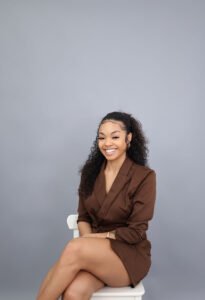
Photos courtesy of Sean Gazmin
Growing up, she says, she gravitated toward her Blackness. Her grandparents were old school and country. There were comments about her hair. There were things said that she describes, with grace, as “not racist, but definitely prejudiced.” While Jephina did not allow it to diminish her, she didn’t always know how to occupy both sides of herself fully.
That started to shift when she began posting. And it shifted completely in February 2026, when she was invited to a Chinese New Year Gala in Toronto. It was the first time, in her entire life as a creator, that she had been included in a specifically Asian space. “I have been invited to countless Black events over the years,” she says. “But this was the first time.” She was invited not despite her mixed heritage but because of the platform she had built—a platform that had made her Chinese Jamaican identity visible on a scale nobody else had bothered to attempt.
THE ARCHIVE
Central to her storytelling is a book. It’s a heavy, dense volume compiled in the year 2000 by Jephina’s uncle, a community elder named Patrick Lee. The book catalogued the members of the Chinese Jamaican diaspora who chose to be featured in the book by family name. She has featured it on her page and every time she does, the comments flood in. People want to trace roots. People recognize surnames. People reach out from Malaysia, from the UK, from across the Caribbean, from China itself, connecting over a shared heritage that mainstream media has never thought to document.
“This book was not made for the public,” she explains. “The older generation they keep things hush. They’re very private. Patrick doesn’t feel comfortable mass-producing it because these families trusted him with their information.“ She respects that. But the book, for her, has become a symbol: evidence that these stories exist, that someone thought them worth preserving, that the work of cultural documentation is not new. She is just doing it in a different century, with a different set of tools.
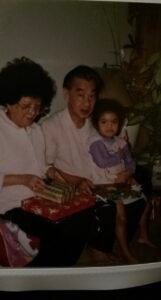
Photo courtesy of Jephina’s family
Her Hakka 101 video series does the same thing with language. She is careful to name what it is: her home, Hakka, the dialect of her grandparents’ kitchen, which she learned through proximity and love rather than formal study. “I make it very clear: this is my home, Hakka. This might not be standard. We speak Dung gon Hakka. I’m not an expert.” But she posts anyway, because the alternative is silence and erasure costs more than imperfection.
There’s nothing like a home-cooked meal from your mom. There’s built-in daycare, built-in community, and built-in care for the seniors. And you’re never lonely there is always noise, always someone. People live alone and they think that’s freedom. I look at it and think: who is catching you when you fall? In a Caribbean home, there is always a net.
WHY IT MATTERS
Ask Jephina what she wants, ultimately, from all of this and she does not hesitate. A documentary. A long-form film. Something that traces the full arc: from the villages of Guangdong to the parishes of Jamaica, from the cargo boats to Scarborough, from her grandfather leaving his wife and children in China with only enough money for one passage to a granddaughter standing in his village a hundred years later, recording everything on her phone.
“One hundred years from now, our lives will seem as distant as our great-grandparents seem to us,” she says. “You might know some facts, but not much. Not what things felt like. Not the humanness of it.” That is what she is after: not a history lesson, but a feeling. The texture of a life lived between worlds, the particular flavor of a culture that exists nowhere else on earth. To be Chinese but Caribbean or Caribbean but Chinese is entirely its own thing.
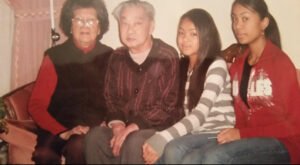
Photo courtesy of Jephina’s family
She is doing it for her Popo, who extended her own life. Popo always said just by getting to hold her great-grandson. She is doing it for her son, Zachariah, who was two-and-a-half when his great-grandmother passed and knows her now only through pictures. She is doing it so that when he is grown, when she is gone, when the world has moved on to some new obsession, he will be able to play a video on whatever screen exists by then and hear his mother say, in Hakka: this is where we come from. This is who we are. This is why it matters.
I want my son and his kids after him to know these were real people. Real lives. And I was there and I loved them and I wrote it all down, Jephina says.
To follow Jephina’s journey, visit her YouTube channel, where the archive is always growing.