
Bonjou. Sa ka fet? If you don’t know what that means, you’re exactly the person Trina wants to reach.
- I, like many children born of the diaspora, was never taught Kwéyòl, she says.
- A Gap No One Was Filling
- [Additional Read: Caribbean Heritage in Every Page: The Visionary Founder of Nine Mile Babies ]
- Rejected, Then Liberated
- I definitely cried. I definitely felt out of my depth. I definitely doubted myself. But I never let someone else pull me out of alignment or deny these children access to such a brilliant learning source.
- More Than a Book
- This isn’t about money for me. It never has been. If I wanted to make money fast, I could write any children’s book. But I wanted to do something specific, to preserve my culture, for my people, for my children.
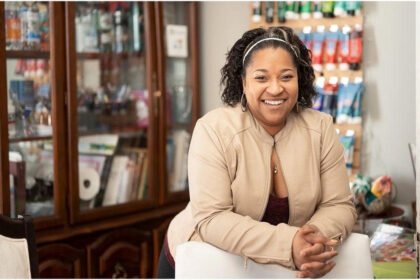
Born and raised in London to parents from Dominica, Trina is the founder of Kwéyòl 4 Kids, a self-published platform of children’s books, activity materials, and teaching aids dedicated to preserving one of the Caribbean’s most endangered languages. She’s a journalist by training, an artist by nature, and a cultural archivist by necessity.
I, like many children born of the diaspora, was never taught Kwéyòl, she says.
Her father, a proud Kwéyòl speaker, reserved the language for conversations between adults, not out of secrecy, but out of something older and sadder: internalised colonial shame. He’d grown up being told Kwéyòl was the language of the poor, the common, the beneath. Children were beaten for speaking it in school. The Dominican government had even attempted to ban it outright.
View this post on Instagram
Her mother’s family, however, was having none of it. From a rural village on Dominica’s east coast, near the Kalinago Territory, Trina’s maternal grandparents spoke far more Kwéyòl than English and had no intention of stopping. Her favourite story: the day a local schoolteacher passed her grandfather’s home and told him to speak English to his children. Her grandfather told the teacher to get off his property, in Kwéyòl. That detail still makes her laugh.
A Gap No One Was Filling
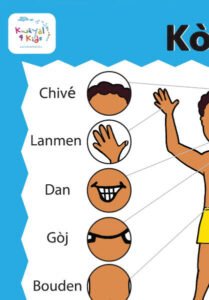
When Trina went looking for Kwéyòl teaching materials, she found almost nothing. For children, she found absolutely nothing. So she built it herself.
What began in 2009 has grown into something quietly extraordinary: a body of work that bridges generations, travels across continents, and lands in the hands of parents who buy the books for their children and end up learning just as much. “I get so much feedback from adults saying they bought the books for their kids but learned so much Kwéyòl themselves,” she says. A nursery teacher in St. Lucia places a batch order with her every year.
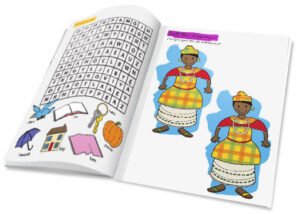
Photo courtesy of Andi Best
The urgency is generational and mathematical. Third-generation Dominicans and St. Lucians born in the UK arrived between 1970 and 1990. The fourth generation, 1990 to 2010. The fifth are being born right now. “We are at a very critical point,” she says. “When I speak to children today, they’ll say things like, ‘My great-gran was from St. Vincent, I think.’ There are children who aren’t even sure which island their heritage is from.” She pauses. “That is so shocking to me. And so sad.”
[Additional Read: Caribbean Heritage in Every Page: The Visionary Founder of Nine Mile Babies ]
The older Windrush generation is dying. The generation after them was never taught Kwéyòl. Changes to UK immigration policy have all but stopped the fresh linguistic influx from the islands. Even the spaces that once celebrated Caribbean culture, including Notting Hill Carnival, community events, and diaspora gatherings have, in her view, become diluted. “Some Kwéyòl events are fantastic,” she says. “Others are very disappointed. It feels like all that was retained was rum and madras.” For a culture as layered as this one, she finds that heartbreaking.
View this post on Instagram
Rejected, Then Liberated
When Trina first approached mainstream UK publishers, the rejections were swift. “This isn’t a recognised language,” she was told repeatedly. After the third or fourth time, she stopped asking for permission and published herself, building her own website, handling her own PR and doing all of it alone.
I definitely cried. I definitely felt out of my depth. I definitely doubted myself. But I never let someone else pull me out of alignment or deny these children access to such a brilliant learning source.
She retains 100% of her profits and operates entirely on her own terms. The structural barriers, however, haven’t disappeared. Meta has repeatedly refused to verify her Kwéyòl 4 Kids account despite her meeting all stated criteria, a wall she notes that several other Creole and Pidgin educational profiles face as well. Even in 2026, Kwéyòl still isn’t getting the recognition it deserves.

Photo courtesy of Andi Best
More Than a Book
What keeps her going, through printing costs, gatekeeping and the solitude of building something like this alone, are the voice notes. Parents send recordings of their children counting from one to 10 in Kwéyòl. “To hear a child counting and the parent saying ‘this is what they learned from your products,'” she says, “does something to my heart that can’t be replicated.”
There was a point when printing costs nearly broke her entirely. She came close to shutting down production. It was the messages from families that kept her going.
This isn’t about money for me. It never has been. If I wanted to make money fast, I could write any children’s book. But I wanted to do something specific, to preserve my culture, for my people, for my children.
Her message to the diaspora is clear: teach your children. Bring them around Kwéyòl-speaking adults. Celebrate Jounen Kwéyòl, not just the music and the rum, but the history, the language and the substance. Give your child a foundation: colours, numbers, days of the week. All of which, she notes with quiet pride, her products already cover.
View this post on Instagram
As for what’s next? “Things are happening in the background,” she says. “It may happen a bit slower, but more is definitely coming.”
Kwéyòl 4 Kids books and teaching materials are available at kweyol4kids.com