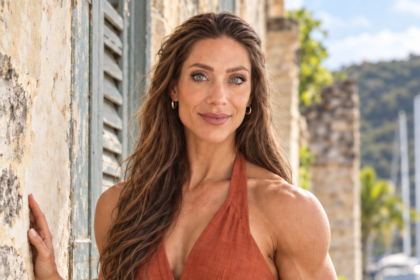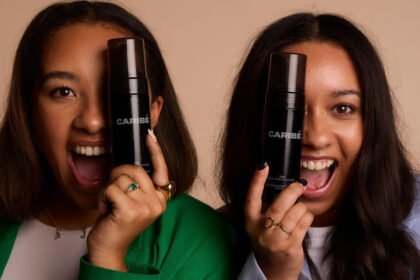

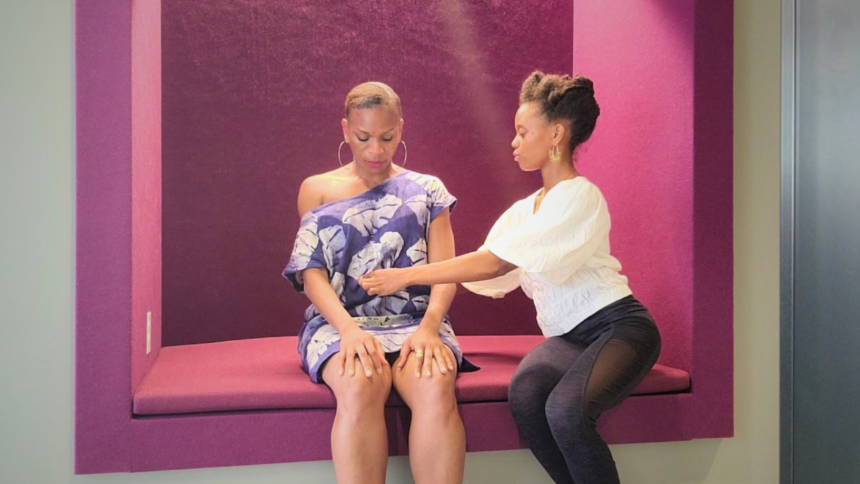
It is no secret that Indo-Caribbeans are a lively and vivacious people. We speak with our hands and use our whole bodies to tell a story. We laugh loudly, move with unapologetic rhythms, and express ourselves with boldness. And surely, we demand the best out of life, including ourselves.
While these characteristics may shape who we are – Generation X, Millennials, and Generation Z are determined to rewrite the script because they believe that strength isn’t the only thing that defines us. Instead they’re shifting the narrative, whole-heartedly into what many refer to as a “soft era”. This can be defined as a deliberate lifestyle choice where emotional safety, a sense of comfort, personal healing, peace and ease are the priority. It is a dynamic shift that transcends nationality. It speaks to the need to identify with what is deeply personal rather than what is culturally acceptable.

Reasons For The Shift
While grit and resilience have long since been the driving force for our parents and grandparents – the ones who helped build our nation, grow our communities and provide a better life for our families [whether involuntarily by way of slavery or by way of migration] it required to some degree – a hardening. While this is innocently referred to as having “tough skin”, this toughness subconsciously became an unhealthy mental-emotional battle for so many Caribbean women today. 
The Real Problem
The issue lies not just in the distressing memories we encountered as children – such as being yelled at, emotionally or physically abused, publicly humiliated, or told hurtful things like you’ll never be enough. The deeper issue lies in our inability to exercise true courage to develop new thought and speech patterns. This is not an overnight job however, because we naturally become what we’ve been exposed to.
If you were raised in an environment that constantly demanded excellence, you’re likely to place that same kind of pressure on yourself, if not more. If you experience harsh language or name-calling, you may have internalized those voices and repeated it at moments of failure. If humor or criticism replaced healthy communication, you tend to normalize put-downs and negative self-talk in your own life.
[Additional Read: Self-Care for Women Entrepreneurs: Strategies to Boost Success and Well-Being]
Am I The Only One Who Talks To Myself?
No, you are not. Self-talk is common. Everyone does it.
Self-talk is the subconscious mind at work in real time. It is often described as an inner dialogue that helps us process thoughts and experiences. When it is healthy, it keeps us focused and on track. For example, it might help you go into a store, buy exactly what you need, and leave without distraction or simply having a clear head.
Unhealthy self-talk, however, can include badgering, self-criticism, or speaking harshly to yourself. It becomes toxic when it involves name-calling, constant criticism, overcontrol, or even intrusive thoughts.
Common Phrases of Unhealthy Self-Talk
- “I’m always messing up. Why can’t I get it right?”
- “Life would be better if…”
- “You see how she is doing that? I could never do that.”
- “I’ve tried that before. It doesn’t work.”
- “That was dumb. Why did I say that?”
- “I can’t believe I did that.”

How To Disrupt The Thought Pattern
The first step is awareness without shame or judgment.
Pay attention to your environment, including family and friends. Notice whether you are repeating unhealthy patterns of speech or thought. If your words are not positive, progressive, or aligned with your core values, they may reflect unhealthy self-talk.

If that internal dialogue becomes self-destructive, it is time to make a change.
Here are a few ways to begin:
- Write it down: Journal your thoughts, feelings, dreams, and values.
- Observe yourself for one week: Notice whether your thoughts, speech, and actions align with what you wrote.
- Get in tune with your body: Take a dance class or engage in movement. Encouraging environments can help reshape thought patterns.
- Listen to audiobooks: Exposure to new perspectives can support mental shifts.
- Seek professional support: Speak with a therapist, counselor, or mental health professional.
- Join a support group: Communities such as recovering people-pleasers or survivors of abuse can provide understanding and accountability.
Own Your Experience
When you choose growth, others may not follow immediately, and that is OK. You are not responsible for being anyone’s role model.
Focus on your own progress. Celebrate your milestones, whether that means taking yourself out to dinner, writing yourself a love note, going on a solo trip, or creating a playlist that reflects confidence and self-love.
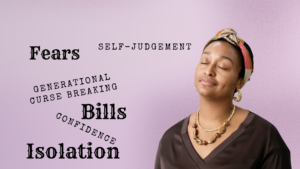
Suggested playlist
- India Arie — “Private Party,” “Just Do You” “There’s Hope”
- Londrelle — “Self Love”
- Jeverson — “Good for the Soul”
- Geminelle — “I Forgive Myself & Release”
- Patrice Roberts — “Rock So”
- Taurus Riley — “She’s Royal”
Suggested Audiobooks (Available on Audible)
- Tracee Stanley — “The Luminous Self”
- Mel Robbins —“Let Them Theory”
- Lindsay C. Gibson — Adult Children of Emotionally Immature Parents
- Jim Burns — Doing Life with Your Adult Children
In essence, it is a fact that what we speak is in direct correlation to what and how we think. As we come of age – we take on a career, get married, have children and pave our own way, but the voices of our Mothers, Aunts, Grandmothers and Teachers live on in us.
That’s why it’s so important to recognize when unhealthy self-talk starts to seep in and get the best of you. Remember this isn’t just self-improvement, it’s generational healing.