
Cyndie Beauboeuf didn’t wait for permission to take up space in the luxury market. She just walked in with a handbag she made herself.
- Growing up, I didn’t see many Caribbean luxury brands, she says. Especially not in Europe, where I’m now based. And that absence stayed with me.
- I realized there was an opportunity to create something meaningful, she says. Something that could connect my Caribbean roots with Spanish artisanal expertise.
- I’m inspired by the fact that the Caribbean goes beyond aesthetics, she says. It’s about translating a feeling, a cultural richness, into each design.
- The level of precision, patience and tradition behind each piece is something I deeply respect, Beauboeuf says. Everything is done by hand, and that naturally brings a sense of discipline to the process.
- Beauboeuf says, the language and cultural nuances were not my own. I didn’t always know where to go, who to speak to, or how to position myself within the industry.
- Haiti is much more than what people typically see, she says. It’s a place with depth, beauty, and a strong cultural identity. It’s not something that’s always obvious at first glance. It’s something you discover over time.”
- If I can create something that feels honest, that reflects where I come from, and that contributes, even in a small way, to how Caribbean creativity is seen, she says, that would already mean a lot.
The designer has a particular kind of audacity. It’s the kind that doesn’t come from confidence but from having no other option but to create. She is the founder of Karaïbe, a luxury handbag brand handcrafted in Spain and rooted in the Caribbean. She is Haitian. She lives in Madrid. And what she is building is one of the more compelling arguments in fashion right now: that Caribbean culture doesn’t need to be adapted or simplified to earn its place in luxury. It already belongs there.
Growing up, I didn’t see many Caribbean luxury brands, she says. Especially not in Europe, where I’m now based. And that absence stayed with me.
Beauboeuf had always been drawn to handbags, not just as objects but as something she describes as transformative. “They have the ability to transform not just an outfit, but also a mood.” When she discovered Ubrique, the town in Andalusia, Spain that has quietly supplied leather craftsmanship to the world’s most coveted fashion houses for generations, something clicked. Here were artisans who understood that objects deserve to be made slowly, with precision and reverence for materials.
I realized there was an opportunity to create something meaningful, she says. Something that could connect my Caribbean roots with Spanish artisanal expertise.
And so Karaïbe was born.
What ‘Inspired by the Caribbean’ Actually Means
Fashion has a complicated relationship with the Caribbean. It borrows the color, the pattern, the reference and rarely reaches further than the surface. Aesthetics without authorship.
Beauboeuf is not drawing from the Caribbean the way someone might flip through a travel magazine. She is drawing from memory, from the specific knowledge that comes from belonging somewhere.
I’m inspired by the fact that the Caribbean goes beyond aesthetics, she says. It’s about translating a feeling, a cultural richness, into each design.
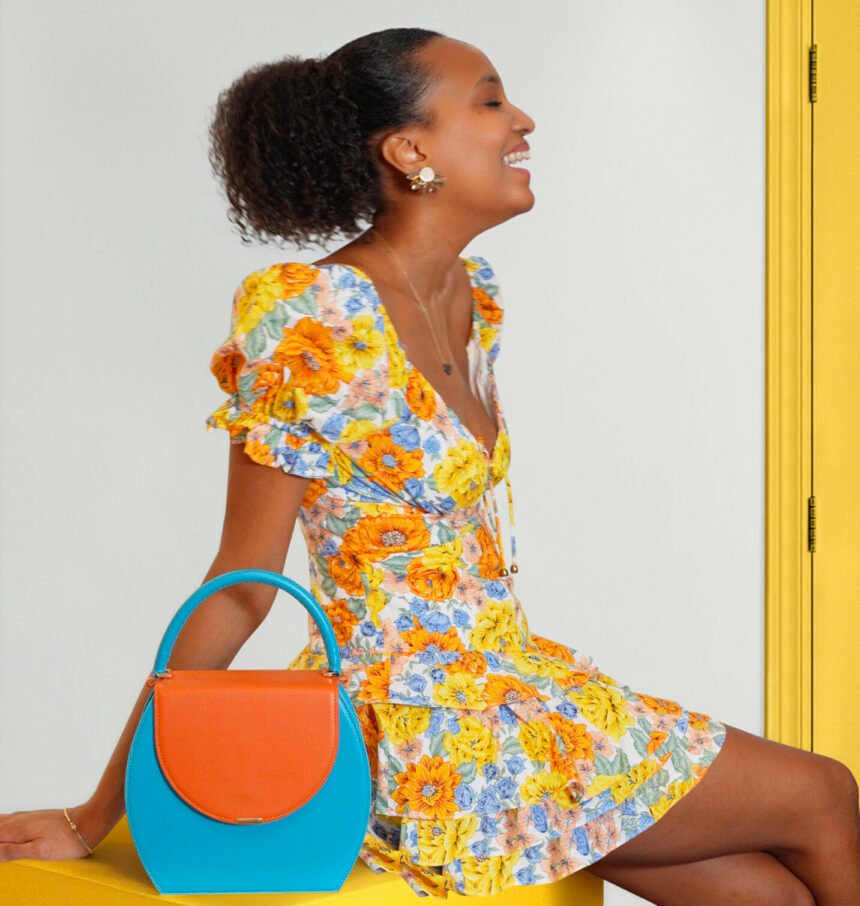
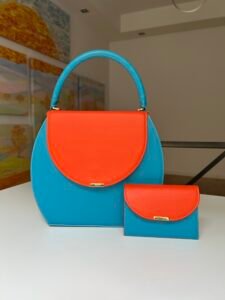
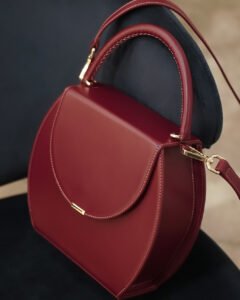
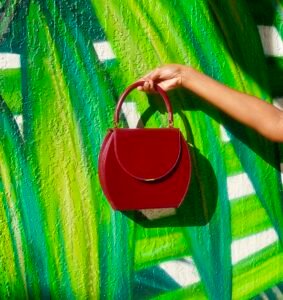
For her, that starts with color. Bold, intentional color — the kind found in a Haitian sunrise, in market fabrics, in architecture that has refused to be anything other than itself. “I’ve always known I didn’t want to create another black or beige handbag like the ones we see everywhere. I wanted each piece to feel alive.” Shape matters too. One silhouette in the Karaïbe collection is inspired by the form of a coconut, familiar and grounded, carrying memory just by existing. High luxury has long favored the abstract and the neutral. Beauboeuf is trading in the specific.
Ubrique and Making Things Slowly
Tucked into the mountains of Cádiz, Ubrique is a place whose name is synonymous with a standard. Its artisans have worked by hand for generations with an unhurried precision that cannot be faked or accelerated.
The level of precision, patience and tradition behind each piece is something I deeply respect, Beauboeuf says. Everything is done by hand, and that naturally brings a sense of discipline to the process.
That discipline shapes how Karaïbe operates. The brand produces in limited editions, small batches that are as much an ethical stance as a business strategy. “I wanted Karaïbe to exist in opposition to fast fashion. Everything we create is done slowly, with a real focus on quality and intention.” Looking ahead, she is drawn to an on-demand model: pieces made specifically for each client.

Building Without a Network
What Beauboeuf has pulled off is more than a footnote. Building a luxury brand is hard. Building one in a country that is not yours, where the language is not your first and the networks do not exist, is something else.
Beauboeuf says, the language and cultural nuances were not my own. I didn’t always know where to go, who to speak to, or how to position myself within the industry.
She reflect on her experience. “Being a Caribbean woman building a luxury brand in Spain comes with its own set of challenges. But it also gives me a unique perspective. And that perspective is exactly what shapes Karaïbe today.” Her advice to other Caribbean women building creative businesses internationally is immediate: Don’t wait for the perfect moment. It doesn’t really exist.
Haiti, Seen Clearly
Ask Beauboeuf about Haiti and something shifts. The entrepreneur talking strategy gives way to something more personal.
Haiti is much more than what people typically see, she says. It’s a place with depth, beauty, and a strong cultural identity. It’s not something that’s always obvious at first glance. It’s something you discover over time.”
She is clear-eyed about the misrepresentation. “I don’t think Haiti is represented fairly in mainstream media. It’s very often shown through a negative lens, and that can overshadow everything else the country has to offer.” The biggest misconception, she says, is the reduction of a whole country to a single narrative. “In reality, it’s layered, complex, and full of life in ways that aren’t often highlighted.”
This is what Karaïbe is, at its core. A counter-narrative carried in a handbag. A piece of Haiti arriving in the luxury market not as a guest, but as a rightful presence.
Being Human About It
Beauboeuf is doing something quietly different from the luxury industry standard. She is being honest about it.
Her Instagram presence is warm and process-forward. She brings her community into the making of the brand, not just the finished product. “I didn’t want to follow the traditional, sometimes distant image of luxury. I chose to be open, to show the process, and to build the brand in a more human and transparent way. I believe luxury should feel accessible. Not in terms of compromising on quality, but in how people connect with it.” The difference, she says, is meaning. Many brands offer comparable products without the depth or the sense that buying the piece means participating in something larger than a transaction. Karaïbe offers that.
What Lasts
Beauboeuf does not map out her legacy in increments. She thinks in terms of staying authentic and not getting ahead of herself.
If I can create something that feels honest, that reflects where I come from, and that contributes, even in a small way, to how Caribbean creativity is seen, she says, that would already mean a lot.
She says it quietly. No performance in it.
Beauboeuf is not trying to be a symbol. She is trying to make something real, something worthy of the culture that made her. The fact that it is becoming a symbol of Caribbean excellence and diasporic creativity is almost incidental.
Karaïbe is available via @karaibeofficial and through the official website.